
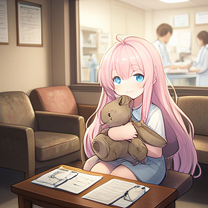
My First Few Weeks in Berlin: A Language Learning Headache (and a Trip to the Doctor!)
Okay, deep breaths. Moving to Berlin was amazing. The history, the food, the pace of life…it’s completely different, and honestly, a little overwhelming. But the biggest hurdle, as everyone warned me, is the language. I’m trying so hard, but sometimes I just feel like a confused toddler trying to build a skyscraper. Today’s post is about something particularly confusing: figuring out when to go to the Notarzt (emergency room) versus the Hausarzt (general practitioner).
The Confusion: “Notarzt” vs. “Hausarzt”
Seriously, these words sound identical! And the difference is… well, it was confusing me for a good chunk of the week. I had this nasty cough, kept feeling a bit dizzy, and panicked. My first instinct was to head straight for the Notarzt. I’d heard stories about emergency rooms in Germany – they’re actually pretty efficient. I walked into this place, practically sprinting, and told the nurse, “Ich habe eine sehr schlechte Erkältung und ich fühle mich schwindelig! Ich brauche dringend Hilfe!” (I have a very bad cold and I feel dizzy! I urgently need help!).
The nurse, a lovely woman named Frau Schmidt, looked at me with a very serious expression and said, “Bitte ruhig bleiben. Das klingt vielleicht nach einer Erkältung. Wir müssen einen Termin beim Hausarzt vereinbaren.” (Please stay calm. That might just be a cold. We need to make an appointment with your general practitioner.)
I was baffled. Hausarzt? What was that?
Understanding the Roles: A Little German Explanation
Okay, okay, deep breaths. I spent the next hour (and a very awkward conversation with a patient who spoke perfect English) trying to understand the difference. Basically, the Hausarzt is your family doctor, your go-to person for regular check-ups, common illnesses like colds and flu, and minor injuries. They can give you prescriptions, refer you to specialists if needed, and generally handle most of your routine healthcare needs.
Think of them as your primary caregiver.
The Notarzt – the emergency doctor – is for serious, life-threatening situations. Things like chest pain, difficulty breathing, severe bleeding, or sudden loss of consciousness. It’s meant for actual emergencies.
The difference is key: Hausarzt = Routine. Notarzt = Emergency.
Real-Life Scenarios and My Mistakes
Here’s where it got even more complicated. I went to a friend’s birthday party and accidentally cut my finger pretty badly. It was bleeding quite a bit, and I panicked again, immediately thinking Notarzt. My friend, thankfully, intervened and said, “Nein, nein! Das ist nichts Ernstes! Geh zum Hausarzt!” (No, no! That’s nothing serious! Go to your general practitioner!). He was right. It was a clean cut, and with a bit of antiseptic and a plaster, it was fine.
That was a valuable lesson. I’d learned the hard way that not every dizzy spell or cough requires a trip to an emergency room.
Useful Phrases to Know
Here are some phrases that have been incredibly helpful for me:
- “Ich brauche einen Termin beim Hausarzt.” (I need an appointment with my general practitioner.)
- “Kann ich zum Notarzt gehen, wenn ich starke Schmerzen habe?” (Can I go to the emergency room if I have severe pain?)
- “Ist das dringend?” (Is this urgent?) – This is useful to ask if you’re not sure.
- “Ich spreche nicht sehr gut Deutsch, können Sie langsam sprechen?” (I don’t speak German very well, can you speak slowly?) – Always a good one to have!
A Quick Grammar Note: Vocabulary Comparison
It’s not just about the words themselves. The grammatical structures around them are important. Notice how I use “der Hausarzt” and “der Notarzt.” German uses gendered nouns, and this affects the articles (der, die, das) you’ll need to use. Don’t worry about mastering this immediately, but be aware of it! It’s a key difference between English and German.
Ultimately, I’m realizing that learning German isn’t just about memorizing vocabulary; it’s about understanding the culture and the way people approach healthcare. It’s also about not panicking (too much!). I’m still making mistakes, but I’m getting there, one awkward conversation – and one trip to the Hausarzt – at a time. Ich hoffe, das hilft! (I hope this helps!)

Leave a Reply