
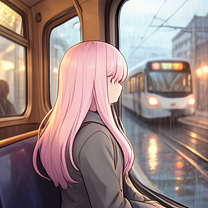
Navigating Germany: Buses, Trains, and Direction – It’s More Confusing Than It Should Be!
Okay, so here I am, six months in Berlin, and let me tell you, learning German is… a journey. It’s not just about saying “Hallo” and “Danke.” It’s about understanding how people actually communicate. And right now, one of the biggest hurdles is figuring out how to tell a bus driver I want to go that way, instead of the way they automatically assume. It’s all down to these things called “Prepositions of Direction,” and frankly, they’re kicking my butt.
The Problem with “Hier” and “Dort”
I’ve spent a lot of time on public transport – buses and trains – and it’s terrifying. Not because of the traffic (though that’s stressful!), but because every conversation about direction feels like a minefield. Everyone uses “hier” (here) and “dort” (there) seemingly interchangeably, and I keep ending up going completely the wrong way.
Yesterday, I was trying to get to the Gemäldegalerie – the art museum – and I asked the bus driver, “Ich möchte bitte zu hier fahren?” (I would like to please go here?). He looked at me completely bewildered and said, “Aber Sie sagten, Sie wollen zum Museum!” (But you said you wanted to the museum!).
Turns out, “hier” means relative here. I was pointing to a small, slightly rundown building a block away from the museum. He was thinking “here” as in, “where you are now.” I realized I needed to be much more specific.
Key Prepositions – Let’s Get Specific
It’s not just “hier” and “dort.” There are a bunch of other words that drastically change the meaning. Here are a few that I’ve found most useful so far:
- Geradeaus: This one is a lifesaver. It literally means “straight.” I used it last week on the U-Bahn (subway) and said, “Können Sie mich bitte geradeaus fahren?” (Can you please go straight?). The driver understood immediately. It’s amazing how often “geradeaus” is used!
- Links: Left. Pretty straightforward, right? I messed this up so badly on my first few days. I asked for directions to a bakery and ended up on the opposite side of the street!
- Rechts: Right. Same as “links,” but the other way.
- Vorbei: Past. This is one I’m still struggling with. I asked a woman where the train station was and I wanted to say, “Können Sie mich bitte vorbei der Kirche fahren?” (Can you please go past the church?). I ended up being directed to the church! Apparently, “vorbei” means to go alongside something.
- Neben: Beside/Alongside. Again, this one tripped me up. I wanted to board a bus and said “Ich möchte neben Sie sitzen” (I would like to sit beside you!), and the driver looked at me like I was crazy! He meant next to you.
Practical Examples and Common Mistakes
Let’s look at some real-life scenarios:
Scenario 1: Getting on a Bus
Me: “Entschuldigung, ich möchte auf diese Bus fahren.” (Excuse me, I would like to get on this bus.)
Bus Driver: “Wohin möchten Sie fahren?” (Where are you going?)
Me (trying to be clear): “Ich möchte bitte geradeaus fahren.” (I would like to please go straight.)
Bus Driver (slightly confused): “Geradeaus?”
I need to remember to add a destination! I’ve started saying: “Ich möchte bitte zu [Destination] fahren.” (I would like to please go to [Destination].)
Scenario 2: Asking for Directions
Me: “Entschuldigung, ich suche das Rathaus.” (Excuse me, I’m looking for the town hall.)
Person: “Gehen Sie links und dann geradeaus.” (Go left and then straight.)
I nearly walked back in the opposite direction!
My Biggest Learing – Don’t Assume!
The biggest thing I’m realizing is that Germans really assume. They assume you know where you’re going, and they don’t elaborate unless you specifically ask. I’m making a conscious effort to be incredibly specific, even if it feels a little awkward. I’m also starting to write down the key prepositions and directions to help me remember them.
It’s frustrating, of course. There are times I just want to yell, “Straight! Left! Right!” But I’m trying to remember that it’s part of the learning process. And honestly, the little victories – successfully getting on the right bus after a bit of frantic gesturing – make it all worthwhile. I’m slowly, painfully, but surely, mastering the art of asking for directions in German. Wish me luck! Ich brauche Kaffee! (I need coffee!)

Leave a Reply