
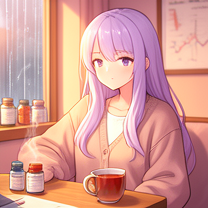
Navigating Gesundheit: My First Steps into Understanding German Medicine
Okay, so, moving to Berlin was… intense. I’d always loved the culture, the food, the feel of the city, but the reality of actually living here, especially when it comes to things like healthcare, has been a rollercoaster. I’m a freelance graphic designer, so things are pretty good financially, but dealing with the German system has been a serious learning curve. The biggest thing, honestly, is just understanding how to ask for what I need – and not making a complete fool of myself in the process. This whole “Gesundheit” thing – that’s what they call healthcare here, by the way – is so different.
The First Appointment – “Ich habe Kopfschmerzen”
The first few weeks, I just tried to muddle through. I had a terrible headache one afternoon, and needed to see a doctor. I went to a Hausarzt – that’s a general practitioner, basically. I tried to explain it in English, but the receptionist, Frau Schmidt, just looked at me with a polite but bewildered expression. I finally managed to say, “Ich habe Kopfschmerzen. Sehr stark!” (I have a headache. Very strong!). She then asked me something in German that completely went over my head. It was “Haben Sie Fieber?” (Do you have a fever?). I panicked and blurted out, “Nein, nein! Kein Fieber!” (No, no! No fever!). It turned out I did have a slight temperature, which is a big deal in Germany.
It was a good reminder to try and learn a few basic phrases. I quickly realized that simply saying “I feel sick” isn’t enough.
Understanding the Imperative – Instructions from the Doctor
The doctor, Dr. Meier, was fantastic. He spoke slowly, and he was very patient. After examining me, he said, “Nehmen Sie dieses Medikament zweimal täglich.” (Take this medication twice a day). That’s where I really started to notice the imperative forms. They’re everywhere! It’s not just about giving orders; it’s how they’re giving instructions.
Later, he told me to “Trinken Sie viel Wasser!” (Drink plenty of water!). Simple, right? But it highlighted how frequently the imperative form is used for advice and simple directions. It made me realize I needed to pay attention to how they were phrasing things.
Common Phrases and Imperatives You Need to Know
Here are a few more phrases I’ve picked up, with the imperative in bold:
- Nehmen Sie das Medikament ein! (Take the medication!) – This is probably the most common one.
- Schreiben Sie bitte Ihren Namen! (Write your name, please!) – Usually when filling out forms.
- Legen Sie sich hin! (Lie down!) – Used by the doctor when examining you.
- Atmen Sie tief ein! (Breathe deeply!) – Very helpful when I’m feeling anxious.
- Sieh mal! (Look!) – They use this a lot when pointing something out.
A Misunderstanding – And a Valuable Lesson
Last week, I went to the pharmacy to pick up a prescription. I asked the pharmacist, Herr Lehmann, for “ein starkes Medikament gegen Erkältung” (a strong medication for a cold). He looked at me strangely and said, “Nehmen Sie diesen Hustensaft!” (Take this cough syrup!). I wanted something to fight the cold, not just soothe the symptoms. I realized my English phrasing – “strong medication” – translates differently. He patiently explained that “Hustensaft” (cough syrup) was a common and effective treatment.
It was a really good lesson about the importance of being specific with your requests. It’s not just about saying what you think you need, but actually describing what you’re experiencing.
“Wie geht es Ihnen?” – And How to Respond
Of course, I also have to learn how to respond to the inevitable “Wie geht es Ihnen?” (How are you?). My usual response is “Mir geht es gut, danke.” (I’m doing well, thank you). But I’m also learning to be a bit more descriptive, especially if I’m not feeling 100%.
For example, if I’m feeling a little run-down, I might say, “Ich bin ein bisschen müde, aber ich fühle mich besser.” (I’m a little tired, but I feel better.)
My Next Steps – Learning More
I’m planning to start using an app that translates German medical terms. It’s a long shot, but I figure it will help me understand the prescriptions and the explanations the doctors give me. I’m also trying to watch more German medical dramas (yes, they exist!) to get used to the language.
The biggest takeaway? Don’t be afraid to ask questions. Seriously. It’s okay to make mistakes. Frau Schmidt, Dr. Meier, and Herr Lehmann have all been incredibly helpful, and I’m slowly, slowly, getting the hang of navigating the German healthcare system. “Viel Erfolg!” (Good luck!) to me – and to anyone else trying to understand Gesundheit!

Leave a Reply