
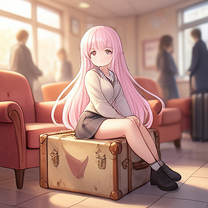
My First Month of German Road Rage: Talking About Transport Problems
Okay, so let me be honest. Moving to Berlin was amazing. The history, the food, the…well, everything. But learning German? Not so much. Especially when it comes to, you know, just getting around. Seriously, my first month has been a chaotic blend of hopeful smiles and utter confusion when it comes to talking about transport problems. It’s exhausting!
The Initial Panic: “Ich habe ein Problem!”
The first few days, I just blurted out “Ich habe ein Problem!” to everyone – the barista, the taxi driver, the guy at the bike rental shop. It felt like the most appropriate response to anything going wrong. And it was! The first taxi driver didn’t understand where I was going, then he took a ridiculously long route, and when I tried to explain (using only frantic hand gestures and a phrasebook), he just looked at me like I was completely mad.
The important thing I learned quickly is that just saying “Ich habe ein Problem!” isn’t enough. You need to actually explain the problem.
Essential Phrases for Transport Troubles
Here’s what I’ve started to pick up, and what’s actually helped. It’s not perfect, but it’s a start:
- “Entschuldigung, ich komme nicht so gut zurecht.” (Excuse me, I’m not getting along very well.) – Use this when you’re lost or confused.
- “Wo ist…?” (Where is…?) – Obvious, right? But saying it clearly is key.
- “Könnten Sie mir helfen?” (Could you help me?) – Always a good starting point, even if they don’t immediately understand.
- “Ich brauche die U-Bahn/S-Bahn nach…” (I need the U-Bahn/S-Bahn to…) – This is crucial when talking about public transport. U-Bahn is the underground and S-Bahn is the suburban train.
- “Wie komme ich zu…?” (How do I get to…?) – Another essential question.
My First Train Disaster
Let’s talk about the S-Bahn. Last week, I was trying to get to Potsdam, which is supposed to be beautiful. I bought a ticket and followed the signs, but somehow ended up on a completely different train. I was stressed, feeling completely lost and just wanted to scream.
I approached a woman sitting near me and, trying to sound calm (which was difficult!), I said, “Entschuldigung, ich habe mich verirrt. Ich wollte nach Potsdam, aber ich bin hier gelandet.” (Excuse me, I’m lost. I wanted to go to Potsdam, but I ended up here.)
She looked at me kindly and said, “Ach, Potsdam! Das ist weit weg. Nehmen Sie die nächste S-Bahn nach Berlin Hauptbahnhof. Von dort aus müssen Sie umsteigen.” (Oh, Potsdam! That’s far away. Take the next S-Bahn to Berlin Hauptbahnhof. From there you need to change.)
It turned out she was absolutely right, and she even pointed out the exact platform to get on. It was a huge relief!
Common Mistakes and How to Fix Them
I’ve made so many mistakes. The biggest one? Assuming everyone speaks English. I learned that hard way when I tried to explain a particularly convoluted route to a bus driver. He just stared at me, completely bewildered.
Also, the pronunciation is brutal. My attempts at saying “U-Bahn” sound more like “U-bahn,” and people often look at me strangely. I’m working on it, but it’s a process!
A Small Victory: The Bike Repair Shop
Yesterday, my bike chain snapped. I was devastated! I went to a local bike repair shop, a small place run by a really nice older gentleman named Herr Schmidt. I explained the situation (again using “Ich habe ein Problem!” – don’t judge!) and he patiently listened.
He said, “Kein Problem, junge Frau! Wir reparieren das sofort.” (No problem, young lady! We’ll fix it immediately.) And he did. He fixed my chain, explained what had happened, and even gave me a few tips on how to avoid it in the future.
It was a small victory, but it made me feel much more confident.
Moving Forward
I’m still struggling, definitely. But I’m learning. I’m starting to understand the rhythms of the city, and more importantly, I’m learning how to communicate even when I don’t have all the words. I’m buying a phrasebook and using it every day. I’m practicing with people, even if they just look confused. And I’m accepting that getting lost and making mistakes is part of the adventure.
Next time, I’ll focus on learning more specific vocabulary for different transport types – trams, buses, ferries… Wish me luck! Ich drücke Ihnen die Daumen! (I’m wishing you luck!)

Leave a Reply