
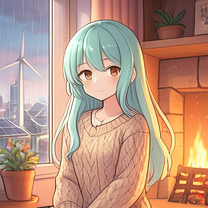
My Journey into Grünen: Talking About Renewable Energy in Germany
It’s been six months since I landed in Berlin, and honestly, the biggest surprise hasn’t been the rain (it’s always raining) or the sausage. It’s been how seriously everyone here takes… well, everything. Especially when it comes to the environment. I’d done some basic German before coming, but “grünen” – green – felt like it meant everything. Turns out, it really does. I’m starting to understand why Germany is a leader in renewable energy, and it’s starting to feel less like a political buzzword and more like a genuine way of life.
The First Conversation: The Supermarket
My first real test came at the Edeka supermarket. I was grabbing some fresh vegetables, and the young man behind the counter, Max, noticed I was carefully examining a bunch of organic bananas.
“Schon wieder Bio?” he asked, with a slight smile. (Already again, bio?)
I stammered, “Äh… ja, Bio. Ich… ich versuche, weniger Fleisch zu essen.” (Yes, bio. I… I’m trying to eat less meat.)
He nodded understandingly. “Das ist gut. Wir haben auch viele regionale Produkte. Wir haben Kartoffeln aus Brandenburg!” (That’s good. We also have many regional products. We have potatoes from Brandenburg!) He then launched into a passionate explanation about the importance of buying local and supporting farmers who use sustainable practices. I nodded along, feeling a little lost but also incredibly impressed. I realized “Bio” wasn’t just a label; it was a whole conversation.
Key Phrases and Vocabulary
Here are some phrases I’ve picked up that are actually useful when talking about sustainability:
- “Ich bin umweltbewusst.” (I am environmentally conscious.) – This is a good opener.
- “Ich möchte meinen ökologischen Fußabdruck reduzieren.” (I would like to reduce my ecological footprint.) – A bit grand, but people understand the intention.
- “Woher kommt das?” (Where does this come from?) – Crucial for checking if something is local or sustainably produced.
- “Ist das Bio?” (Is this organic?) – You will need this.
- “Wie ist die Energieversorgung?” (How is the energy supply?) – A surprisingly common question, especially when discussing building renovations.
- “Solaranlage” – Solar panel system. I overheard this a lot when visiting friends.
- “Windkraft” – Wind power. They talk about it constantly!
Misunderstandings and Laughable Moments
The first time I tried to explain my attempts to reduce my plastic use, I completely botched it. I told my roommate, Lena, that I was “doing Greenwashing” because I was buying fancy, eco-friendly cleaning products. Lena burst out laughing. “Was? Greenwashing? Nein, nein! Das ist nur ‘grünes’ Zeug, das vielleicht etwas teurer ist, aber es ist gut für die Umwelt!” (What? Greenwashing? No, no! That’s just ‘green’ stuff that might be a little more expensive, but it’s good for the environment!). I felt utterly mortified, but it taught me to be more careful with my terminology.
Talking About Renewable Energy in Everyday Life
It’s not just the supermarkets. Conversations about energy are everywhere. My colleague, Steven, was explaining his new apartment renovation.
“Wir haben eine neue Erdwärmepumpe installiert,” he said proudly. (We installed a new geothermal heat pump.)
I asked, “Und wie sieht es mit dem Strom aus?” (And what about the electricity?)
He explained, “Wir haben einen Stromtarif mit 100% Ökostrom. Das bedeutet, der Strom kommt von Solar- und Windkraftanlagen.” (We have an electricity tariff with 100% green energy. That means the electricity comes from solar and wind power plants.) I realized “Ökostrom” wasn’t just a marketing term; it was a tangible, concrete commitment. I started looking into switching my own electricity provider – it’s a surprisingly popular thing to do.
Small Steps, Big Impact
I’m still learning, and I definitely make mistakes. I still occasionally buy single-use plastic bags, but I’m actively trying to change that. It’s not about being perfect; it’s about making conscious choices. I’m starting to feel a real connection to the community here, and that connection is built on a shared understanding of the importance of protecting the planet. Learning German has opened up a whole new world of conversations, and I’m incredibly grateful for it.
“Danke für die Informationen!” (Thank you for the information!) – I hear people say this a lot, and honestly, I’m starting to feel like I’m part of it too.

Leave a Reply