
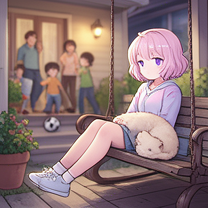
Navigating Nachbarschaft: Talking About Your Neighbors in Germany
Okay, so here I am, six months in Berlin, and I’m starting to realize that knowing “Hallo” and “Danke” isn’t enough. Actually connecting with people, especially in my new neighborhood, is… well, it’s proving to be a lot trickier than I thought. I’ve spent a lot of time just walking around, feeling a bit lost and, honestly, a bit intimidated. Everyone seems to know each other, and I’m desperately trying to figure out how to actually be part of it. This week, I’ve been focusing specifically on learning how to talk about my neighbors – a surprisingly important skill, it turns out!
The First Encounter: Meeting Frau Schmidt
It started with a simple thing: a little package of cookies left on my doorstep. No note, just the cookies. I looked up and saw Frau Schmidt, my elderly neighbor from number 12, standing on her porch. “Guten Tag!” she called out. “Ich dachte, Sie könnten etwas Süßes gebrauchen!” (Good day! I thought you might like something sweet!).
I stammered out a “Hallo, Frau Schmidt! Vielen Dank! Das ist sehr nett von Ihnen!” (Hello, Frau Schmidt! Thank you very much! That’s very kind of you!). I wanted to respond warmly, but my cheeks were burning. I realized immediately that a simple “Danke” just wasn’t cutting it. It felt… transactional.
She started telling me about her cat, Minka, and her prize-winning geraniums. I nodded and made little “Ja, ja” noises, trying to show I was listening. I desperately wanted to ask her questions, but I was afraid of saying the wrong thing. I managed to get through “Wie alt ist Minka?” (How old is Minka?) and she explained, “Sie ist sieben Jahre alt. Sie ist ein kleiner Terror!” (She’s seven years old. She’s a little terror!).
Basic Phrases for Introductions
Here are a few phrases I’ve found really useful for starting conversations:
- “Ich bin [Your Name]. Ich wohne hier neu.” (I’m [Your Name]. I live here newly.) – Essential!
- “Wie heißen Sie?” (What’s your name?) – Always a good starting point. Respond with “Ich heiße…” (My name is…)
- “Wie geht es Ihnen?” (How are you? – formal) – I’ve been using this, but I’m told it’s a bit formal for first encounters. I’m trying to switch to “Wie geht es dir?” (How are you? – informal) when talking to people my age.
- “Ich möchte Sie gerne besser kennenlernen.” (I’d like to get to know you better.) – A little bold, but it opens the door!
Common Conversations & Phrases
I had another slightly awkward encounter last week when I was struggling to carry some groceries. A young man, Luke, lived next door. He offered to help. “Kein Problem!” he said, and we ended up chatting for a few minutes.
Here’s what we said:
- Luke: “Brauchen Sie Hilfe?” (Do you need help?)
- Me: “Ja, bitte! Vielen Dank!” (Yes, please! Thank you very much!)
- Luke: “Das ist kein Problem.” (It’s no problem.)
- Me: “Ich bin [Your Name]. Ich bin Amerikanerin.” (I’m [Your Name]. I’m American.)
I quickly learned that people often ask about why I moved to Berlin. I usually respond with: “Ich habe einen Job hier.” (I have a job here.) or “Ich wollte ein neues Leben beginnen.” (I wanted to start a new life.)
Potential Pitfalls (and How to Avoid Them!)
Okay, this is important. I made a massive faux pas last week. I was trying to compliment Frau Schmidt’s garden (I really like your flowers!) and I used the wrong phrase. I accidentally said “Sie sind schön” (They are beautiful – formal). She looked so confused! A friend told me that in this situation, you’d actually say “Das ist schön” (That is beautiful – general). It’s easy to get confused with the formality, especially when you’re trying to be polite. I’m working on it!
Moving Forward: Small Steps
I’m trying to be more proactive. I’ve started saying “Guten Morgen!” (Good morning!) to people I pass on the street. I’m even planning to bake some cookies (hopefully without causing a diplomatic incident!) and leave them on Frau Schmidt’s doorstep. It’s a slow process, and I’m definitely making mistakes, but I’m starting to feel a little less like an outsider and a little more like… well, like I might actually be able to build a life here.
Vocabulary to Remember:
- Nachbarschaft: Neighborhood
- Nachbar/Nachbarin: Neighbor (male/female)
- Gebrauchen: To need, to use
- Süß: Sweet
- Dank: Thank you
- Bitte: Please
- Kein Problem: No problem
I’m still learning, but I’m committed to trying to build these relationships. I have a feeling that understanding the neighborhood, and the people within it, is the key to really feeling at home. Next week, I’m going to try to join the local “Kaffeeklatsch” (coffee afternoon) – wish me luck!

Leave a Reply