
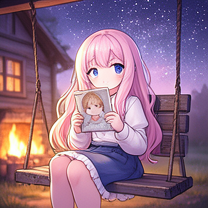
Remembering Home: My Journey with German Memories
Okay, deep breath. Six months in Berlin. Six months of struggling with the U-Bahn, ordering the richtige coffee (still haven’t quite nailed it – always end up with Milch instead of Schlag!), and desperately trying to make friends. It’s amazing, it’s frustrating, and honestly, it’s a total rollercoaster. But one thing I’ve realized is that trying to talk about the past, especially my past, has been one of the trickiest, and surprisingly rewarding, parts of learning German. It’s not just about verbs and nouns; it’s about building connections.
Warum ist das so schwer? (Why is this so hard?)
Initially, I thought, “Okay, ‘Ich erinnere mich’ – easy!” Then I realized how incredibly sensitive Germans are about nostalgia. It’s not that they’re unfriendly, it’s just…different. Asking someone about their childhood felt like stepping onto a minefield. I’d start with “Wie war dein Kind?“ and often get a polite, but very brief, “Ach, gut.” Or worse, a look of slight discomfort. I think the problem is that in English, we’re much more open about sharing childhood memories. In Germany, there’s a definite sense of ‘private’ when it comes to personal history, particularly the early years.
Die erste Konversation (The First Conversation)
I was chatting with my colleague, Thomas, during a Kaffee-Pause (coffee break). I wanted to tell him about my summers growing up in England. I wanted to paint a picture of the green fields and playing cricket. I started, “Ich war als Kind sehr gerne draußen. Wir haben oft Fußball gespielt.” Thomas nodded, smiled politely, and then said, “Ah, ja. Fußball. Aber… warum hast du nicht hier in Deutschland Fußball gespielt?”
I completely froze. He wasn’t interested in my memories, he was trying to subtly point out that I was somehow ‘wrong’ for not participating in the dominant sport. It was a small thing, but it highlighted a really important difference. He was interested in what I could do now, not what I’d done in the past.
The correct way to respond (I learned later) is to just accept the question about soccer without immediately launching into a detailed explanation of your childhood. You can acknowledge it and change the subject. For example: “Ja, Fußball ist toll. Aber… wie war dein Kind?“
Wichtige Vokabeln (Important Vocabulary)
Let’s build a little toolbox here. These phrases will be your lifelines:
- Wie war dein Kind? (How was your childhood?) – This is the biggest hurdle. Tread carefully.
- Ich erinnere mich… (I remember…) – A good starting point, but be prepared for questions about why you remember something.
- Als Kind… (As a child…) – Use this to introduce memories.
- Das war schön! (That was nice!) – A simple, positive response.
- Es war anders. (It was different.) – Often used when describing the past, and can sometimes feel a little negative, so be mindful of your tone.
- Was hast du gern gemacht als Kind? (What did you like to do as a child?) – A slightly less direct way to inquire about memories.
Ein kleines Missverständnis (A Little Misunderstanding)
Last week, I was talking to my landlady, Frau Schmidt. I was telling her about my grandmother’s garden, describing the roses and the bees. I said, “Meine Oma hatte wunderschöne Rosen, und die Bienen haben immer fleißig gearbeitet.” She stared at me, completely bewildered.
“Bienen? Hier? In Berlin? Das ist doch unmöglich!” (Bees? Here? In Berlin? That’s impossible!)
Turns out, she’d assumed I was talking about bees in a Bienenhaus (beehouse) – something very rare in the city center. It was a fantastic reminder to be specific and to understand that cultural assumptions can completely change the meaning of a sentence.
Tipps und Tricks (Tips and Tricks)
- Start small: Don’t launch into a full recounting of your childhood. Begin with a brief, positive memory.
- Ask about them: Instead of dominating the conversation with your memories, ask about their childhood. “Wie war dein Kind?” followed by “Und was hast du gern gemacht?” shows interest and reciprocation.
- Be prepared for silence: Sometimes, people simply don’t want to talk about their past. Don’t push it.
- Don’t over-explain: Germans value brevity. Short, clear sentences are key.
Abschließend (Finally)
Learning to talk about memories in German has been a huge challenge, but it’s also a brilliant way to connect with people and understand their culture. It’s about more than just words; it’s about respect and recognizing that the past isn’t always something you can readily share. I’m still stumbling, still making mistakes, but every time I manage a small conversation about me and my past, I feel like I’m one tiny step closer to truly understanding this incredible country. Weiter so! (Keep it up!)

Leave a Reply