
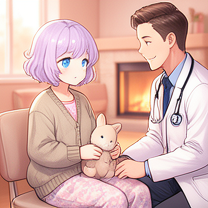
Navigating the Gesundheit: Talking About Doctor Visits in German
Okay, so I’ve been in Berlin for six months now, and let’s be honest, the Gesundheit (health) system is…well, it’s a different beast than I’m used to. I’ve had a few appointments, and while I can get by, I definitely felt like a complete idiot at first. It’s not just about understanding the words; it’s about understanding the culture of how you approach a doctor in Germany. This article is about what I’ve learned, the mistakes I’ve made (and you can avoid!), and how to actually talk about your ailments when you’re sitting across from a German doctor.
The Initial Consultation – “Was ist los?”
The first appointment was terrifying. I walked into the Praxis (practice) feeling completely ridiculous. The receptionist, Frau Schmidt, asked, “Was ist los?” (What’s wrong?). I panicked and blurted out, “Ich habe Kopfschmerzen!” (I have a headache!). It sounded so simple, but the doctor, Dr. Müller, looked at me expectantly.
He proceeded to ask a lot of questions, not just about the pain, but about my lifestyle, my diet, my stress levels. It wasn’t just, “Where does it hurt?” It was, “What do you eat in a typical day? How much sleep do you get? Do you drink alcohol? Do you exercise?” Seriously! He wanted to know everything.
A key phrase I learned to use when I was overwhelmed was, “Ich verstehe das nicht ganz.” (I don’t quite understand). It bought me a little time to think, and Dr. Müller was actually very patient.
Common Phrases and Vocabulary
Let’s go through some key phrases you’ll hear and use:
- Ich habe Schmerzen. (I have pain.) – Use this for anything from a headache to a pulled muscle.
- Es juckt mich. (It itches me.) – For skin irritations.
- Ich bin krank. (I am sick.) – Pretty straightforward.
- Ich habe ein Problem mit… (I have a problem with…) – Use this to explain your symptoms clearly. For example, “Ich habe ein Problem mit meinem Bauch.” (I have a problem with my stomach.)
- Wie lange habe ich das schon? (How long have I had this for?) – This is essential! Be honest, even if you feel a little embarrassed.
- Was kann ich tun? (What can I do?) – A polite way to ask about treatment options.
My First Misunderstanding – “Der Arzt sagt…”
This is where it got really awkward. I was complaining about a persistent cough, and I confidently said, “Der Arzt sagt, ich soll Hustensaft nehmen.” (The doctor says I should take cough syrup). Dr. Müller looked at me completely bewildered.
It turns out, I’d heard someone else say that, and I’d misheard the doctor’s response. He explained that he hadn’t told me to take cough syrup – I’d just assumed! This highlighted a huge difference in communication style. Germans often prefer a more direct approach. He then prescribed me a specific inhaler, and I realized the importance of actively listening to exactly what the doctor says.
Asking for Clarification – “Könnten Sie das bitte wiederholen?”
Seriously, don’t be afraid to ask for things to be repeated. I had to learn to use this phrase – “Könnten Sie das bitte wiederholen?” (Could you please repeat that?). It felt incredibly awkward the first time, but it’s absolutely necessary. Also, “Was bedeutet das?” (What does that mean?) is your friend.
For example, after he explained the dosage of my medication, I asked, “Was bedeutet 200 Milligramm?” (What does 200 milligrams mean?). He patiently explained it again.
Talking About Your Medical History
They really want to know about your past. I was asked about previous illnesses, surgeries, and allergies. I had to admit that I hadn’t always been the best with my health. I was a little embarrassed to talk about my teenage years, but it was vital information. “Ich hatte früher einmal eine Allergie gegen… (I used to have an allergy to…)” is a common phrase.
A More Relaxed Conversation – After a Few Appointments
After a couple of appointments, things started to flow a little better. I realized that Dr. Müller wasn’t judging me for my questions or my awkwardness. He was genuinely trying to help me. We even had a brief, surprisingly friendly chat about the weather! (“Schönes Wetter heute, nicht wahr?”) (Nice weather today, isn’t it?). It was a small victory, but it showed me that building a rapport is important, even with a doctor.
Final Thoughts
Talking about your health in German can be daunting, but with a little preparation and a willingness to learn, you can navigate the Gesundheit system with confidence. Don’t be afraid to make mistakes – everyone does! Focus on listening carefully, asking questions, and using the phrases I’ve shared. And remember, alles wird gut! (Everything will be good!).

Leave a Reply