
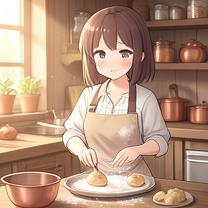
My Kitchen, My Struggle: Learning German Through Cooking (And Imperatives!)
Okay, so let me be honest. Moving to Berlin felt… a lot. The language, the culture, the everything was different. I’d studied German for a year before I arrived, but theory and actually speaking are miles apart. I thought I was doing okay, but when I tried to follow my German landlady, Frau Schmidt, while she was making dinner, I was completely lost. Suddenly, I realized I needed to focus, and food seemed like the perfect starting point. It’s practical, everyone eats, and it’s a great way to practice basic conversation. Plus, I genuinely love cooking!
The First Disaster: “Mehr Salz?”
The first time I really felt the urgency was when I offered to help Frau Schmidt make Spätzle. I was so excited! I remembered seeing it on TV, and I thought, “I can do this!” I started chopping onions… a lot of onions. Then, she looked at me and said, “Wie wär’s mit etwas Salz?” – “How about some salt?” I completely panicked. I wanted to respond, to ask me how much salt, but I just blurted out, “Ja, bitte!” – “Yes, please!” I added what felt like a ridiculous amount of salt to the boiling water. The Spätzle were… well, let’s just say they were intensely salty.
Frau Schmidt just laughed, a warm, understanding laugh. “Ach, das ist gut!” – “Oh, that’s good!” she said, and she quickly added a huge pot of water to dilute it. It was a painful lesson, but a really important one. That’s when I realized I needed to start understanding the imperative – the commands and requests in German.
What Are the Imperatives? (And Why They Confuse Me!)
The imperative is basically telling someone to do something. It’s how you give instructions, make requests, or tell someone what to do. In English, we use “Do this!” or “Don’t do that!” In German, it’s often simpler, dropping the “du” (you) – though that’s not always the case.
Here are some basic forms I’ve encountered:
- Infinitiv: (The base form of the verb) – Kochen (to cook), Rühren (to stir), Schneiden (to cut)
- Imperativ: (The command form) – Koch! (Cook!), Rühre! (Stir!), Schneide! (Cut!)
It’s strange because I was so used to constructing sentences! Suddenly, it was just verb + command!
Practical Phrases in the Kitchen
Okay, let’s look at some more useful phrases I’ve picked up:
- “Schneide die Zwiebeln!” – “Cut the onions!” (Formal – Schneiden Sie die Zwiebeln!)
- “Rühre den Teig gut!” – “Stir the dough well!”
- “Gib etwas Öl in die Pfanne!” – “Put some oil in the pan!”
- “Koch es fünf Minuten!” – “Cook it for five minutes!”
- “Nimm einen Löffel!” – “Take a spoon!” (Requesting something)
- “Frag nicht, wenn du nicht weißt!” – “Don’t ask if you don’t know!” (A helpful little warning from Frau Schmidt!)
I’ve found that even just repeating these phrases, slowly, helps me feel more confident. I practiced saying them while I was helping her make Kartoffelsalat (potato salad) – “Rühre die Kartoffeln!” – “Stir the potatoes!” It felt a bit silly, but it worked!
A Small Victory (and a Bigger Mistake)
Yesterday, I was making a simple Pasta aglio e olio (pasta with garlic and oil) – a total beginner’s dish. I was trying to follow a recipe I found online, and I was meticulously measuring everything. Then, I heard Frau Schmidt calling from the hallway, “Pass den Knoblauch an!” – “Pass the garlic!” I immediately grabbed a clove and just… threw it into the pan. It was way too much garlic. Like, seriously overpowering.
She just chuckled. “Zu viel Knoblauch!” – “Too much garlic!” she said gently. “Ein bisschen ist besser.” – “A little is better.” It was embarrassing, but I laughed too. It’s clear I’m still learning the nuances – like how much is “a little”!
Moving Forward: Don’t Be Afraid to Make Mistakes!
Honestly, the biggest thing I’ve learned is not to worry about making mistakes. Frau Schmidt, and even some of the younger shopkeepers, are incredibly patient and encouraging. They correct me gently, and they are always willing to explain. I’m starting to recognize some of the more common imperatives, and I’m slowly getting better at understanding the flow of conversation.
My goal now is to keep practicing, keep asking questions (even if I stumble over the words!), and keep cooking. Maybe one day I won’t be so reliant on translation apps and I’ll be confidently shouting “Koch!” while whipping up a proper German meal. Or, at the very least, I won’t accidentally salt the entire pot of Spätzle. That would be a step in the right direction, wouldn’t it?

Leave a Reply