
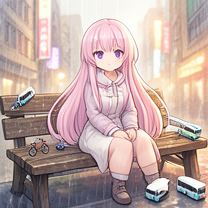
Navigating the Concrete Jungle: My German Mobility Journey
Okay, so here I am, six months in Berlin. It’s amazing, truly. The history, the food, the everything. But let’s be honest, getting around? That’s been…an experience. It’s entirely different from back home, and learning about German urban mobility has become almost as important as learning German itself. I figured, why not write about it, and maybe help other newcomers who’re feeling as lost as I initially did?
The Initial Chaos – and the U-Bahn
My first few weeks were a blur of panic and the rhythmic rumble of the U-Bahn. I’d heard so much about how efficient it was, and honestly, the first time I actually used it, I felt like I’d won the lottery. It’s unbelievably fast, connecting almost every part of the city. But… the crowds!
I remember standing on the platform at Friedrichstraße, completely overwhelmed. Everyone was staring at their phones, muttering, and I just froze. A guy beside me, seeing my confusion, said, “Entschuldigung, brauchen Sie Hilfe?” (Excuse me, do you need help?). I mumbled, “Ja, ich… ich verstehe nicht, wie man die Karte benutzt” (Yes, I… I don’t understand how to use the ticket). He patiently explained, showing me how to tap the contactless payment system – a lifesaver, honestly. The signage is great, though, mostly in German and English, which is a massive help. “Haltestelle” (stop), “Richtung” (direction) – I’ve been repeating those constantly.
Buses: A Gentler, But Slower, Approach
The buses are… well, they’re a different beast. They’re a lot quieter, more local, and you actually see people. It’s a slower pace, which is nice sometimes. I took the bus to Prenzlauer Berg the other day, and it was a lovely ride, watching the city go by. I wanted to buy a coffee at a little café I’d spotted, and I asked the driver, “Entschuldigen Sie, wie komme ich zur Kollwitzstraße?” (Excuse me, how do I get to Kollwitzstraße?) and he pointed me out, saying, “Nur eine Fahrt!” (Just one ride!).
The downside? The routes aren’t always as direct as the U-Bahn. And sometimes, you’re stuck behind a really slow delivery truck! I learned quickly that patience is key.
Cycling: My Biggest Adventure (and Frustration)
I decided I wanted to be a cool, healthy, eco-friendly Berliner. I bought a bike. Big mistake. Okay, not a huge mistake, but definitely a challenging one. The bike lanes are fantastic, and there are so many people cycling, which is inspiring. But the German drivers… they are… assertive.
I had a very close call last week when a taxi driver nearly clipped me. I yelled, “Aufpassen!” (Watch out!), which I think was a good reaction, but honestly, it was terrifying. I’ve also realised that the German version of “casual” is very casual when it comes to road space. I’ve spent a lot of time learning basic bike signals – “Links abbiegen” (turn left), “Rechts abbiegen” (turn right) – it’s crucial. My German instructor, Frau Schmidt, kept saying, “Sicherheit geht vor!” (Safety first!), and I’m finally starting to get it.
Getting Lost (and Asking for Help)
This is where my German really started to come in handy. I got hopelessly lost trying to find a specific market in Kreuzberg the other day. I asked a group of teenagers, “Entschuldigung, ich bin neu hier und ich habe mich verlaufen. Können Sie mir helfen?” (Excuse me, I’m new here and I’m lost. Can you help me?). They were incredibly kind, and one of them, a boy named Luke, walked me part of the way, giving me directions and even pointing out a nice bakery. “Das ist sehr nett von Ihnen!” (That’s very kind of you!). That’s been a recurring theme – people are generally helpful, but you have to ask.
Key Phrases to Know
- “Entschuldigung” – Excuse me (essential!)
- “Wie komme ich…?” – How do I get to…?
- “Ich bin neu hier” – I’m new here.
- “Können Sie mir helfen?” – Can you help me?
- “Aufpassen!” – Watch out! (use with caution!)
Looking Ahead
I’m still navigating the complexities of Berlin’s transport system, but I’m getting there. I’m learning the nuances, the shortcuts, and how to read the signs. More importantly, I’m building my confidence in German, and that’s a huge step. It’s definitely not always smooth sailing, but it’s also incredibly rewarding. And who knows, maybe one day I’ll even be confidently navigating the U-Bahn without a single panicked glance around!

Leave a Reply