
Learning German: When Things Go Wrong – Injuries & The Passive Voice
Okay, so here I am, six months in Berlin, and let me tell you, things happen. It’s not a place where everything just rolls along smoothly. I’m learning German incredibly fast, but honestly, some of my biggest learning moments have come from dealing with little accidents – and trying to explain them to people! This article is about that. It’s about the German I’ve picked up in practical situations, particularly when someone’s been hurt. And, weirdly enough, I’ve had to grapple with the passive voice while doing it.
The First Bruise – “Ich habe mich verletzt!”
It started, predictably, with a ridiculously clumsy moment. I was rushing to catch a U-Bahn, totally engrossed in trying to remember the right words for ‘ferry’ (apparently, ‘Fähre’ is the one!), and I slammed straight into a lamppost. Immediately, I yelled, “Ich habe mich verletzt!” (I’ve injured myself!). The guy behind me just stared, a bit bewildered.
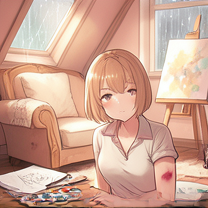
A nice older woman, sensing something was wrong, rushed over. “Was ist passiert?” (What happened?) I managed to stammer out, “Ich…ich bin gegen einen Laternenpfahl gestoßen.” (I…I bumped into a lamppost). She examined my arm, which was now a lovely purple. “Das ist eine Prellung,” she said, pointing. “Eine Prellung ist nicht schlimm.” (A bruise isn’t serious). Relief flooded me. It’s a really common phrase, “Ich habe mich verletzt!”, but hearing it spoken so calmly helped me feel a bit less panicked.
Cuts and Scrapes: “Der Schnitt” and “Der Kratzer”
Then there was the time I was chopping vegetables for dinner – attempting to make a proper ‘Kartoffelsalat’ (potato salad) – and lost control of the knife. A small cut on my finger. “Ich habe einen Schnitt.” (I have a cut). My German friend, Steven, saw it and said, “Nicht die Finger! Sei vorsichtig!” (Don’t the fingers! Be careful!). It’s funny, even something as simple as saying “Ich habe einen Schnitt” feels a bit formal. I’ve realised that people often use “Schnitt” for anything from a tiny scratch to a larger wound.
Broken Bones – The Most Stressful Conversation
This was the toughest one. I was cycling home from a market when I hit a pothole – a classic Berlin experience, really. The pain was intense, and I knew I needed to get to a doctor. I found myself saying, “Mein Arm ist gebrochen!” (My arm is broken!) The pharmacist, a very serious man, immediately called the ambulance. It was a completely different reaction than the bruise. I felt terrible.
The ambulance crew asked, “Wie ist es passiert?” (How did it happen?). I explained about the pothole. “Die Straße ist beschädigt.” (The road is damaged). They were very professional, of course, but the whole situation was incredibly stressful. I learned that when something serious happens, the passive voice – “Es wurde gerufen” (It was called) – is frequently used to describe actions taken by others.
The Passive Voice: “Es wurde gesagt” (It was said)
I’ve noticed this a lot. When I went to the emergency room, the doctor said, “Es wurde eine Röntgenaufnahme gemacht.” (An X-ray was taken). It doesn’t feel natural when I say it, but it’s how they communicate. It’s like they’re reporting on what’s happening, rather than directly stating they are doing something. Understanding this is helping me navigate these conversations, even if it feels a little strange at first. “Es wurde festgestellt” (It was determined) – another one I heard constantly.
Sprains and Strains: “Ich habe mich überanstrengt”
I also sprained my ankle walking in the Tiergarten. I was trying to impress someone with my ability to navigate the trails. Let’s just say, I tripped. “Ich habe mich überanstrengt.” (I overexerted myself). The physiotherapist, Frau Schmidt, explained, “Die Muskeln sind verschwommen.” (The muscles are strained). It’s a really useful phrase to know when you’ve pushed yourself too hard.
Practical Phrases & Mistakes
Here are a few phrases I’ve found really helpful:
- “Ich brauche einen Verband” (I need a bandage).
- “Kann ich Ihnen helfen?” (Can I help you?) – Useful if someone else is injured.
- “Es ist nichts Schlimmes.” (It’s nothing serious). – A reassuring phrase to say to yourself.
I made a huge mistake early on when someone asked if I needed medical attention. I said, “Nein, ich bin stark!” (No, I am strong!). They immediately called a doctor. Lesson learned! Don’t overestimate your toughness.
Wrapping Up: Learning Through Real Life
Learning German through experiences like this is messy, and frustrating, and sometimes a little scary. But it’s also incredibly rewarding. Every time I manage to communicate, even with a few awkward pauses and incorrect grammar, I feel like I’m making progress. And learning the passive voice is helping me understand how Germans actually talk about emergencies – it’s less about “I did this” and more about “This happened, and someone did something about it.” Hopefully, I’ll never need to use it again, but knowing it’s there makes me feel a little more prepared for whatever Berlin throws my way.

Leave a Reply