
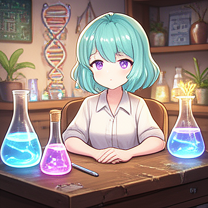
My Journey into Biotech – And Why German is Key
Okay, so, let me start by saying, moving to Munich was… intense. I’d always dreamed of a life outside the States, and the thought of learning German, of really living in a place with such a rich history, was incredibly exciting. But learning a language, especially one as complex as German, felt immediately overwhelming. I thought, “Right, I need to focus on something practical.” And that’s how I stumbled into the world of biotech – and, unexpectedly, the need to really nail my German.
The First Confusion: “Genetische Veränderung”
My job is at a small research lab focusing on developing new agricultural techniques. It’s fantastic, actually – really challenging and I’m learning so much. But the initial conversations were… brutal. I kept using phrases like “We’re modifying the genes” and just… blank stares. My colleague, Dr. Schmidt, patiently explained, “Nein, nein! Wir sprechen von genetischer Veränderung. It’s about changing the genes – like, intentionally. ‘Modifizieren’ sounds too… futuristic for the initial discussion.” I felt so stupid! I’d been trying to sound sophisticated, and I’d just made myself look like a complete idiot. The difference between “Veränderung” and “Modifikation” felt huge. I took notes, wrote it down in my little German notebook, and vowed to pay closer attention.
Ordering Coffee and Talking about CRISPR
It’s not just the technical jargon, it’s everything. Yesterday, I was grabbing a coffee at the local cafe – “die Bäckerei” – and I overheard two scientists talking about CRISPR. I wanted to jump in and say, “Oh, you’re talking about gene editing?” But I hesitated. I wanted to be polite. So, I started awkwardly, “Entschuldigen Sie, wissen Sie, was CRISPR ist?” (Excuse me, do you know what CRISPR is?). The woman, Frau Müller, looked at me and said, “Ach, CRISPR! Das ist doch die Technik, mit der sie die Mais-Gene verändern, um ihn resistenter gegen Schädlinge zu machen, oder?” (Oh, CRISPR! That’s the technique they use to change the corn genes to make it resistant to pests, or?) “Ja, richtig!” (Yes, that’s right!) she added, nodding to her colleague. I realized I’d been thinking about it so abstractly, but it was actually being used in practical ways – to improve crops. It was a small moment, but it felt like a breakthrough.
Phrases You Need to Know
Here are a few phrases I’ve found incredibly useful:
- “Was bedeutet das auf Deutsch?” (What does that mean in German?) – Seriously, use this constantly.
- “Können Sie das bitte langsamer sagen?” (Can you please say that more slowly?) – My German is still pretty fast.
- “Ich verstehe nicht.” (I don’t understand.) – Don’t be afraid to admit it! People are generally happy to help.
- “Wie sagt man das auf Deutsch?” (How do you say that in German?) – Useful for when you hear a word you don’t recognize.
Misunderstandings and Laughing It Off
There was one time I tried to explain “transformation” to Dr. Fischer. I confidently said, “Wir müssen die Zellen durch Transformation verändern!” (We need to change the cells through transformation!). He looked at me, utterly bewildered. Then, he burst out laughing. “Transformation! Ja, ja, das ist ein schönes Wort! Aber wir sagen, die Zellen infiltrieren – sie werden von außen in die Zelle eingenommen.” (Transformation! Yes, yes, that’s a nice word! But we say the cells infiltrate – they are taken into the cell from the outside.) I just sighed and laughed along with him. It’s moments like these that remind me that language learning is about more than just grammar and vocabulary; it’s about understanding people’s perspectives.
Resources That Actually Helped
I found a few things that really clicked for me:
- Duolingo: It’s silly, but it helped me with basic vocabulary and sentence structure.
- Deutsche Welle (DW Learn German): Their website and app have fantastic lessons and exercises, especially for beginners.
- Speaking with Native Speakers: This is crucial. Don’t be afraid to make mistakes! My colleagues have been incredibly patient and helpful.
My German is Improving – Slowly But Surely
Honestly, I still get lost sometimes. I mishear words, I use the wrong case endings (still!), and I occasionally say something completely ridiculous. But I’m getting better. I’m starting to understand more conversations, and I’m even able to contribute a little. Learning German isn’t just about the biotech; it’s about feeling truly integrated into this amazing country. And it’s starting to feel… possible. “Weiter so!” (Keep going!) I tell myself, every morning. Ich werde es schaffen! (I will manage!)
—
Would you like me to expand on a specific area, such as a particular technical term, a specific conversation scenario, or add some more practical phrases?

Leave a Reply