
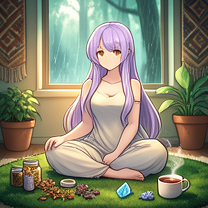
My Journey into German & the World of Heilmittel
Okay, so here I am, almost a year into living in Berlin. I moved here with a job as a translator – mostly technical stuff, thankfully – but honestly, I was desperate for a change. Germany felt…different. Intense, definitely, but different. And the biggest hurdle, aside from the initial culture shock, was the language. I was floundering. I knew some German from a course back home, but trying to order a coffee or ask for directions was a monumental struggle. It wasn’t until I started actually needing to use the language – specifically, when it came to researching alternative medicine – that things really started to click.
The First Conversation: Pain & Arnica
I’d been having a terrible backache for weeks, stubbornly refusing to go away. After a few frustrated trips to the Arzt, who just prescribed painkillers (which I wasn’t really keen on), a colleague, Sarah, suggested I look into Heilmittel – medicinal remedies. “Du musst mal etwas anderes probieren,” she said, “something different.”
I started researching online, using a mix of German and English searches. I found a lot of talk about Arnika (arnica) for bruises and sprains. I needed to actually ask someone about it. I found a small herbal pharmacy near my apartment – Apotheke Kräuterhaus – and cautiously walked in.
The pharmacist, Herr Schmidt, was a friendly, older man. I started, completely nervously, in broken German: “Entschuldigen Sie, ich habe…Schmerzen im Rücken. Ich habe Arnika probiert, aber…?” (Excuse me, I have…pain in my back. I tried arnica, but…?).
He listened patiently, nodding, and responded in German, explaining how arnica worked – “Es hilft bei Verletzungen und Schwellungen.” (It helps with injuries and swelling). He gave me a small ointment to try. It felt…strange, a little odd, but it did seem to help a little. The key was actually understanding what he was saying. I realized that simply knowing the word “Arnika” wasn’t enough.
Navigating the Terminology – A Real Mess!
This was my first big lesson: German terminology for alternative medicine is wild. It’s not just “arnica.” There’s Homöopathie (homeopathy), Naturheilkunde (nature medicine), Bachblüten (Bach flower remedies), Kräutermedizin (herbal medicine)… and so many more. I quickly learned that translating directly from English wasn’t going to work.
I tried to explain to a friend, Markus, that I was interested in exploring Homöopathie for anxiety. I said, “Ich möchte Homöopathie für meine Angst ausprobieren.” He looked at me like I was speaking Martian! He explained that Homöopathie is a very specific system of medicine and that I needed to find a qualified Homöopath. “Du brauchst einen Homöpath!” he exclaimed. “Nicht einfach irgendwelche Tropfen!” (You need a homeopath! Not just any drops!).
I quickly understood that relying on general translations was a recipe for confusion.
Asking the Right Questions – “Wie funktioniert das?”
One of the biggest challenges was understanding the process of how these remedies were used. I kept hearing about “Stärken” (potencies) and “Mittel” (medications) – terms that meant absolutely nothing to me.
I went to a consultation with a Naturheilpraktiker (natural medicine practitioner) named Frau Weber. She was lovely, but her explanations were incredibly complex. She was talking about “Energetische Felder” (energetic fields) and “Blockaden” (blockages). I felt completely lost.
Finally, I blurted out, “Wie funktioniert das? Kannst du es mir einfacher erklären?” (How does that work? Can you explain it to me simply?).
She smiled and explained it in a way that was actually understandable – breaking down the concept into smaller, simpler terms. It was a huge relief! I realized that the key to understanding wasn’t just asking what something was, but how it worked.
Useful Phrases for Your Own Experiences
Here are a few phrases I’ve found really helpful:
- “Was bedeutet das Wort?” (What does that word mean?) – Crucial!
- “Können Sie das bitte langsamer sagen?” (Can you please say that slower?) – Don’t be afraid to ask for repetition.
- “Ich verstehe nicht ganz.” (I don’t quite understand.) – Honest and effective.
- “Wie kann ich das machen?” (How can I do this?) – Great for getting practical advice.
- “Ich bin neu hier und lerne Deutsch.” (I am new here and learning German.) – People are generally very patient if they know you’re an immigrant.
Conclusion: It’s About the Connection
Learning about German alternative medicine has been so much more than just learning about healing techniques. It’s been about learning to communicate in a new language, to understand a different way of thinking, and to connect with people from a different culture. It’s been frustrating at times, definitely, but also incredibly rewarding. And honestly, it’s made me appreciate the effort and dedication that goes into both learning a language and seeking alternative ways to wellness. Viel Glück with your own journey!

Leave a Reply