
Navigating the Gesundheit! – My First Forays into German Doctor Visits
Okay, so here I am, six months in Berlin, and I’m finally starting to feel…comfortable. But let’s be honest, the first few months were a wild ride, especially when it came to dealing with anything remotely resembling an illness. I’d been so focused on learning basic German for ordering coffee and asking for directions that the whole concept of a doctor’s appointment felt incredibly intimidating. And let’s not even talk about understanding what was going on!
The Initial Panic – “Ich habe Kopfschmerzen!”
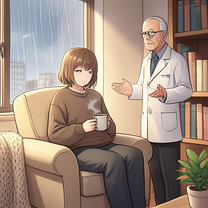
The first time I felt unwell – a really bad headache – I panicked. I knew I needed to go to the Arzt (doctor), but the phrase “Ich habe Kopfschmerzen” (I have a headache) felt incredibly insufficient. I mumbled it to the receptionist, Frau Schmidt, and she just nodded, writing something down. Then, the doctor, Dr. Meier, arrived, and everything went blurry. He asked a lot of questions in rapid German, and I just stared blankly. He kept saying, “Was ist das Gefühl?” (What does it feel like?). I managed a shaky, “Es ist…schmerzhaft!” (It’s…painful!), but I knew I wasn’t communicating effectively.
Learning to Ask About Symptoms – Key Phrases
I realized I needed a better toolkit. I started practicing key phrases, focusing on describing the feeling. Here’s what I found really helpful:
- Wie fühlt es sich an? (How does it feel?) – This is your go-to.
- Wo tut es weh? (Where does it hurt?) – Crucial for pinpointing the location.
- Ist es heiß oder kalt? (Is it hot or cold?) – Useful for feverish symptoms.
- Habe ich Fieber? (Do I have a fever?) – Important to ask!
- Ich habe Schwindel (I’m feeling dizzy).
I also started writing down a list of symptoms in English, then translating them into German. It helped me to really grasp the vocabulary.
Modal Verbs for Advice – “Sie sollten…”
This is where it got really interesting. I quickly learned that doctors in Germany loved to give advice using modal verbs. It’s incredibly common to hear them say things like, “Sie sollten…ruhen” (You should rest), “Sie sollten…trinken” (You should drink), or “Sie sollten…einen Arzt aufsuchen” (You should see a doctor).
I realized it wasn’t just a suggestion; it was an instruction. Once I understood this, it became easier to follow their advice. For example, Dr. Meier told me, “Sie sollten sich ausruhen und viel Wasser trinken,” (You should rest and drink plenty of water) after I described my sore throat.
A Real Conversation – Vom Kopfschmerz bis zur Beratung
Okay, let’s walk through a slightly more detailed conversation I had last week. I was complaining of a persistent cough and feeling generally unwell.
- Me: “Ärztin, ich habe seit drei Tagen Husten und fühle mich nicht gut. Ich habe Kopfschmerzen und bin müde.” (Doctor, I’ve had a cough for three days and I don’t feel well. I have a headache and I’m tired.)
- Ärztin: “Wie fühlt es sich an?” (How does it feel?)
- Me: “Es fühlt sich an, als ob mir etwas in der Kehle kratzt, und ich habe auch Fieber, ich glaube.” (It feels like something is scratching in my throat, and I also think I have a fever.)
- Ärztin: “Sie sollten sich ausruhen und viel Tee mit Honig trinken. Vielleicht sollten Sie auch Paracetamol nehmen.” (You should rest and drink a lot of tea with honey. Maybe you should also take paracetamol.)
- Me: “Okay, vielen Dank!” (Okay, thank you very much!)
Mistakes and Corrections – Learning Through Oops
Of course, I made mistakes! The biggest one was initially trying to explain the cause of my illness. I was trying to say, “Ich glaube, es ist eine Erkältung” (I think it’s a cold), which sounded very confident, but it wasn’t quite right. The doctor gently corrected me, saying, “Es ist vielleicht eine Erkältung, aber wir müssen es erst untersuchen.” (It might be a cold, but we need to investigate it first). It was a valuable lesson – sometimes, just describing the symptoms is enough!
Final Thoughts – “Es wird besser!”
Navigating the German healthcare system, especially when you’re unwell, is definitely challenging. But I’m learning. Every appointment, every conversation, is a step forward. The most important thing is to keep practicing, keep asking questions (even if I have to say, “Entschuldigung, ich verstehe nicht”) and remember that “Es wird besser!” (It will get better!). And maybe, just maybe, I’ll actually understand Dr. Meier’s instructions next time!

Leave a Reply