
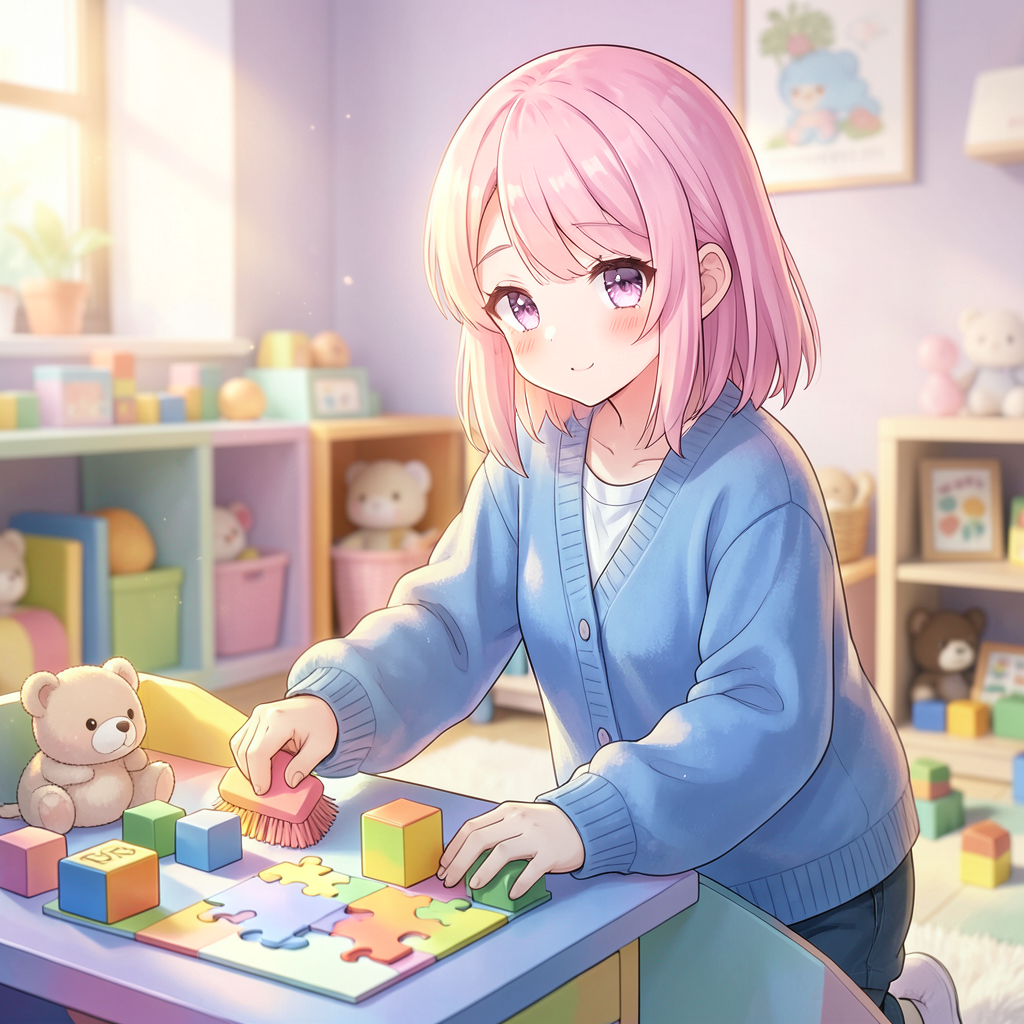
My First Week at the Kita: Decoding Cleaning Protocols – It’s More Than Just Sweeping!
Okay, so, I’m officially working at a Kita – a daycare center – in Munich. It’s amazing, truly. The kids are adorable, and the staff are so kind. But let’s be honest, it’s also… overwhelming. I’m still getting used to everything, and there’s a lot of paperwork, but one thing that really stood out during my first week was the cleaning. It’s so much more involved than just pushing a broom. I realised I needed to understand the whole system, and the German language surrounding it, to actually do my job properly.
The Initial Confusion: “Wie putze ich das?”
My first day, Frau Schmidt – the head educator – showed me around and explained the daily routines. She kept saying, “Wir müssen den Kita-Raum putzen!” (We have to clean the Kita room!) I nodded, grabbed a mop, and started… well, I started mopping. It wasn’t wrong, exactly, but it was… sparse.
Later, I overheard another educator, Herr Lehmann, talking to a colleague. He said, “Ich habe die Spielzeug-Holzflächen desinfiziert.” (I disinfected the wooden play surfaces.) That’s when I realized I needed to learn more than just “putzen” (to clean) – it’s a very general word! “Desinfizieren” (to disinfect) is a crucial one. I asked Frau Schmidt, “Was bedeutet ‘desinfizieren’?” (What does ‘disinfect’ mean?) She explained, “Es bedeutet, die Oberflächen wirklich sauber zu machen – mit speziellen Mitteln!” (It means to clean the surfaces really clean – with special products!). I felt a bit silly asking, but it was important.
Specific Tasks and German Phrases
The Kita has a very specific cleaning schedule. It’s written on a whiteboard in the staff room, and everyone refers to it. Here are some of the things I’ve learned to do:
- Böden wischen: (To mop the floors) – This isn’t just a quick sweep, it’s a proper wet mop, followed by drying.
- Spielzeug reinigen: (To clean the toys) – This involves washing them thoroughly with warm soapy water and then drying them completely. I accidentally left a plastic train out to dry and a little boy immediately tried to eat it! (Frau Schmidt was not happy!).
- Tische und Stühle abwischen: (To wipe the tables and chairs) – Again, it’s not just a quick swipe. We use disinfectant wipes.
- Die Toilettenglocken kontrollieren: (To check the toilet bells) – This is surprisingly important! Every bell needs to be working. I nearly missed it the first time.
- Die Sandkiste reinigen: (To clean the sandbox) – This is a bigger job – shoveling the sand, scrubbing it, and adding new sand. It’s always a messy one!
Common Mistakes and Corrections
I made a few awkward moments, of course. The first time I used the disinfectant spray, I accidentally sprayed it on a child’s artwork! Frau Schmidt quickly reassured the child and said, “Keine Sorge, mein Schatz! Wir machen es sauber!” (Don’t worry, my darling! We’ll clean it up!). I learned that day to be very careful.
Another time, I misread the instructions on the cleaning product bottle. It said “Nur zur Handreinigung!” (Only for hand cleaning!) and I proceeded to use it on the floor. Herr Lehmann politely corrected me, saying, “Das ist für die Hände, nicht für den Boden!” (That’s for hands, not for the floor!).
Vocabulary You’ll Need to Know
Here’s a little list of key vocabulary I’ve found super helpful:
- Reinigen: To clean
- Desinfizieren: To disinfect
- Putzen: To clean (more general)
- Wischen: To wipe
- Schrubben: To scrub
- Abwischen: To wipe down
- Oberfläche: Surface
- Mittel: Cleaning product/solution
- Wasser: Water
- Seife: Soap
- Handtuch: Towel
My Ongoing Learning – It’s a Team Effort
What’s really great about the Kita is that everyone works together. There’s a lot of communication. During a staff meeting, Frau Schmidt said, “Es ist wichtig, dass wir alle die gleichen Standards einhalten.” (It’s important that we all follow the same standards.) She also emphasized the importance of following the “Richtlinien” (guidelines) – which, frankly, are quite detailed!
I’m still learning, and I know there’s a lot more to understand about Kita cleaning protocols. But I’m feeling more confident every day, and with a little more German and a lot of observation, I’m sure I’ll be getting it right – or at least, less wrong! “Viel Glück!” (Good luck!) to anyone starting out here. It’s definitely a challenge, but it’s also incredibly rewarding.

Leave a Reply