
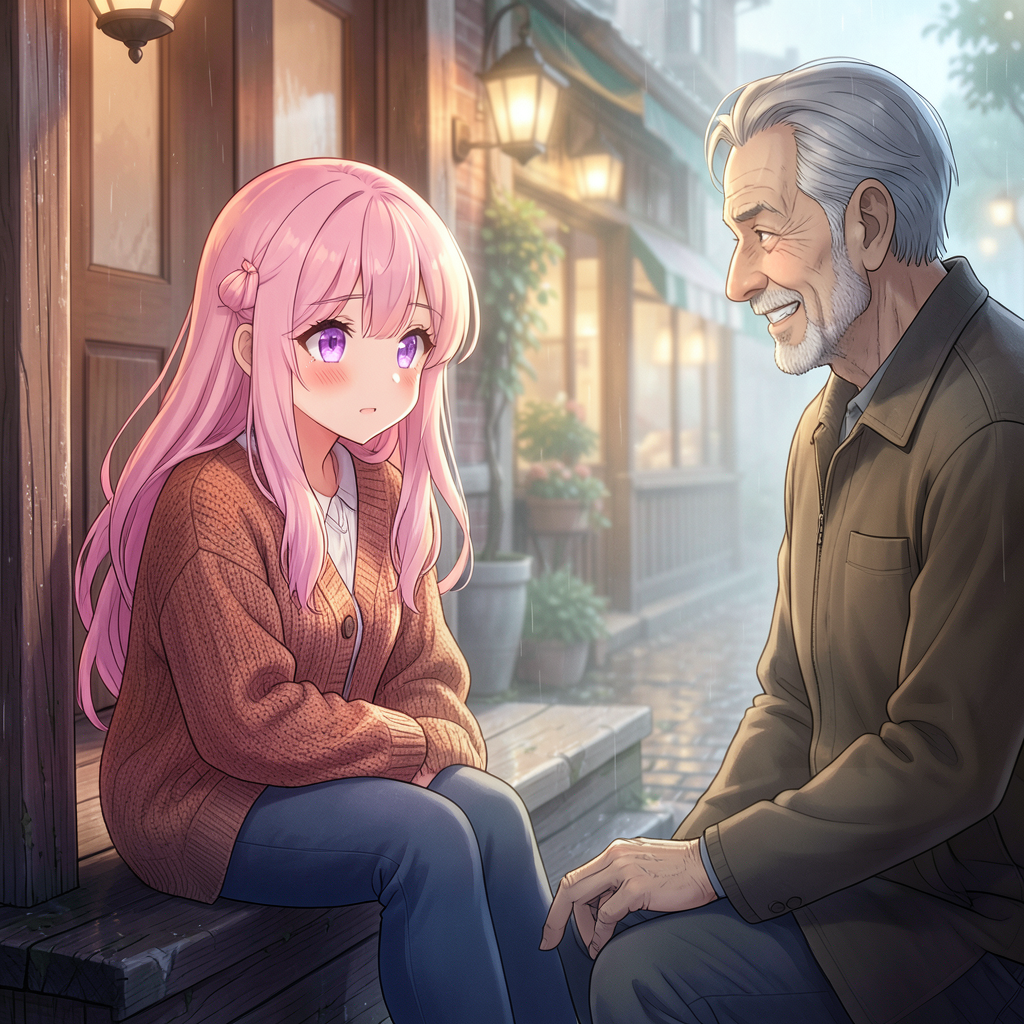
Navigating the Chaos: My First Forays into Asking for Directions in Germany
Okay, deep breath. Moving to Berlin felt like jumping into a very, very busy river. Everyone is rushing, everyone is speaking…and I quickly realized my German was about as useful as a chocolate teapot when it came to actually getting anywhere. Asking for directions? Don’t even get me started. My initial attempts were, let’s just say, entertaining for everyone involved. But slowly, painstakingly, I’m starting to get the hang of it. And honestly, it’s a huge part of feeling like I’m actually living here.
The Panic Attack on Kurfürstendamm
It happened last week. I was determined to find a specific vintage shop I’d seen photos of on Instagram – “Secondhand Dreams” – supposedly near Kurfürstendamm. I’d butchered the pronunciation of “Kurfürstendamm” so badly, I’m surprised anyone could even understand me. I approached a woman with a shopping bag and, in my absolute most confident tone, said, “Entschuldigen Sie, ich suche…Secondhand Dreams? Wo ist das?”
She looked at me with this incredibly patient expression, and then, in perfect German, said, “Das? Das ist weit weg. Sie müssen nach Westen gehen, dann links abbiegen. Dann… sehr weit!” (That? That’s far away. You need to go west, then turn left. Then… very far!). I just stood there, completely bewildered. “Sehr weit!” I realized later, it was the opposite end of the shopping street. My confidence evaporated. I ended up wandering around for an hour, completely lost, before finally finding a map that actually made sense.
Key Phrases You NEED to Know
Let’s talk about the actual words I’ve learned that have made the slightest difference. It’s not about fluency, it’s about being able to say the basics.
- “Entschuldigung, können Sie mir helfen?” (Excuse me, can you help me?) – This is essential. Always start with this, even if you think you can figure it out yourself. People are much more willing to help if you’re polite.
- “Ich suche…” (I am looking for…) – Follow this with what you’re looking for.
- “Wo ist…?” (Where is…?) – The workhorse of asking for directions.
- “Wie komme ich zu…?” (How do I get to…?) – A slightly more formal way to ask about directions.
- “Geradeaus” (Straight ahead)
- “Links” (Left)
- “Rechts” (Right)
- “Die nächste Straße” (The next street)
- “Entschuldigung, die Richtung” (Excuse me, the direction) – useful if someone is already pointing
A Slightly Less Chaotic Encounter
The other day, I was trying to get to a friend’s flat in Neukölln. I’d practiced my pronunciation of Neukölln (it’s totally different than how it looks!) and felt a bit more confident. I asked a young man working outside a bakery, “Entschuldigung, können Sie mir helfen? Ich suche Neukölln. Wo ist Neukölln?”
He smiled and pointed, saying, “Gehen Sie die Straße runter, dann rechts. Es ist nicht weit.” (Go down the street, then right. It’s not far). I followed his directions, and – miracle of miracles – I found my friend’s flat! He even corrected my pronunciation of Neukölln, which I really appreciated. “Neukölln, richtig?” (Neukölln, correctly?) He laughed, and I joined in.
Common Mistakes (and How to Avoid Them!)
Okay, let’s be honest, I’ve made loads of mistakes. Here are a few I’ve encountered:
- Assuming everyone speaks English: Seriously, don’t. Even if someone does speak some English, trying to explain my complex, panicked directions in English just made things worse. Stick to German.
- Over-pronunciation: I tend to enunciate everything as if I’m presenting to the entire world. It makes me sound even more confused. People respond better to a more relaxed delivery.
- Not listening carefully: I often interrupt people while they’re giving directions, and I’ve missed key instructions. It’s crucial to listen attentively and ask clarifying questions.
My Top Tip: Don’t Be Afraid to Look Lost
Honestly, the biggest thing I’ve realized is that people are generally friendly and willing to help. I used to feel so embarrassed about being lost, but now I embrace it. I make eye contact, I apologize for bothering them, and I genuinely thank them for their assistance. I learned that a simple “Vielen Dank!” (Thank you very much!) goes a long way. And sometimes, just looking a little lost is enough to elicit a helpful response.
I still get hopelessly lost, of course. But now, at least, I have a few phrases under my belt, and a slightly better understanding of how to navigate this incredible, chaotic city. And that, honestly, makes all the difference.
—
Would you like me to generate a different article focused on a specific aspect of asking for directions in German, perhaps focusing on a particular scenario or region?

Leave a Reply