
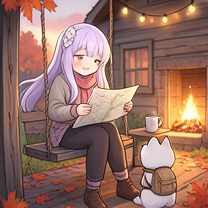
My First Foray into Asking for Directions in Germany
Okay, deep breaths. Moving to Munich was… a lot. The sheer scale of everything is overwhelming, and while I’m incredibly excited about my new job at the software company, navigating the city feels like a constant, slightly panicked game. Honestly, the first few weeks, the biggest struggle wasn’t my German (which is still, let’s be honest, pretty patchy), but just asking for help. People are generally friendly, but the language barrier created this incredibly awkward situation where I’d start gesturing wildly and saying things that probably sounded completely bizarre. I realized I needed to tackle this head-on. So, here’s what I’ve learned – and what’s still tripping me up – about asking for and giving directions in Germany.
The Dreaded “Entschuldigung” – Starting the Conversation
The first hurdle is always the same: initiating the conversation. I quickly realized that just shouting “Entschuldigung!” (Excuse me!) at someone isn’t going to cut it. It feels abrupt and, frankly, a little rude. What works better is a soft, “Entschuldigung, könnten Sie mir vielleicht helfen?” (Excuse me, could you maybe help me?). It’s polite, and it signals that you need assistance.
I practiced this a lot in front of the mirror. Seriously, I sounded like a robot at first. My German wasn’t fluent, but the willingness to try made a huge difference.
Key Phrases for Asking for Directions
Let’s talk about the vocabulary. Here are some phrases I’ve found most useful:
- “Ich suche…“ (I’m looking for…) – This is your essential starting point. “Ich suche den Marienplatz.” (I’m looking for the Marienplatz.)
- “Wo ist…?“ (Where is…?) – Straightforward, but definitely the most common. “Wo ist die Hauptbahnhof?” (Where is the main train station?)
- “Können Sie mir den Weg zu… zeigen?” (Can you show me the way to…?) – This is perfect for when you want someone to walk you there.
- “Ist das weit?” (Is that far?) – Asking this is crucial! I asked this once, and the gentleman pointed me down a tiny alleyway – it was a 30-minute walk!
- “Wie komme ich nach…?” (How do I get to…?) – This is another really useful one.
A Real-Life Mishap (and how it happened)
Last week, I was desperately trying to find the Augustiner Keller beer garden. I’d heard amazing things about it, and I was determined to go. I approached a couple sitting outside a bakery and, armed with my best “Wo ist die Augustiner Keller?” I completely butchered the pronunciation. It came out sounding like “Wa ist da… äu-gu-stiner… kel-er?” They looked utterly bewildered.
Then, a young man, clearly a student, overheard. He patiently corrected my pronunciation – “Augustiner-Keller” – and gave me incredibly detailed instructions, pointing out landmarks and even suggesting a short detour to avoid a particularly crowded street. I felt like such an idiot, but his kindness and willingness to help were amazing. It highlighted for me just how important it was to be patient with myself and to not be afraid to make mistakes.
Giving Directions – My Attempts
Giving directions is even trickier for me. My sentences are often rambling and confusing, even when I’m trying to be clear. I’ve learned that using simple phrases and pointing is often more effective.
Here’s an example of how I attempted to explain where my new apartment is: “Es ist… ähm… ungefähr 20 Minuten zu Fuß vom Hauptbahnhof. Dann… rechts, dann links, dann… ich glaube, da ist eine Kirche, und dann… ich glaube, es ist da!” (It’s… um… about 20 minutes by foot from the main train station. Then… right, then left, then… I think there’s a church, and then… I think it’s there!).
Let’s just say, it didn’t go smoothly. Luckily, my neighbour understood the general idea and gave me much clearer directions.
Important Notes & What I’m Working On
- Gestures are your friend! Don’t be afraid to point. It helps bridge the communication gap.
- Repeat, repeat, repeat! If someone gives you instructions, repeat them back to them to ensure you’ve understood correctly. “Alsohen, ich wiederhole Sie. Sie sagen… (Okay, I repeat you. You said…).”
- Don’t be afraid to ask someone to speak slower. “Könnten Sie bitte langsamer sprechen?” (Could you please speak slower?) is a lifesaver.
- I’m focusing on common landmarks. Instead of trying to remember street names, I’m trying to learn to recognize familiar buildings and features.
I know I have a long way to go, but each conversation, each slightly successful navigation, makes me feel a little more confident. And honestly, that’s the biggest thing – just starting to feel a little less lost. I’m still making mistakes, but I’m learning. And that’s a good start, isn’t it?

Leave a Reply