
My First Month in Munich: Decoding the Housing Situation
Okay, deep breath. Moving to Germany was amazing – the mountains, the beer, the sheer history of everything. But let’s be honest, navigating the housing market felt like trying to solve a Rubik’s Cube while blindfolded. I’d pictured myself happily settled, but the first few weeks were a whirlwind of confusing jargon and a whole lot of “Nein.” I’m writing this because, if I could have had one thing during that time, it would have been a really clear guide to what I was actually hearing and reading. So, here’s what I’ve learned – mostly through trial and error and a whole lot of asking for help.
The Initial Confusion: Apartment vs. House
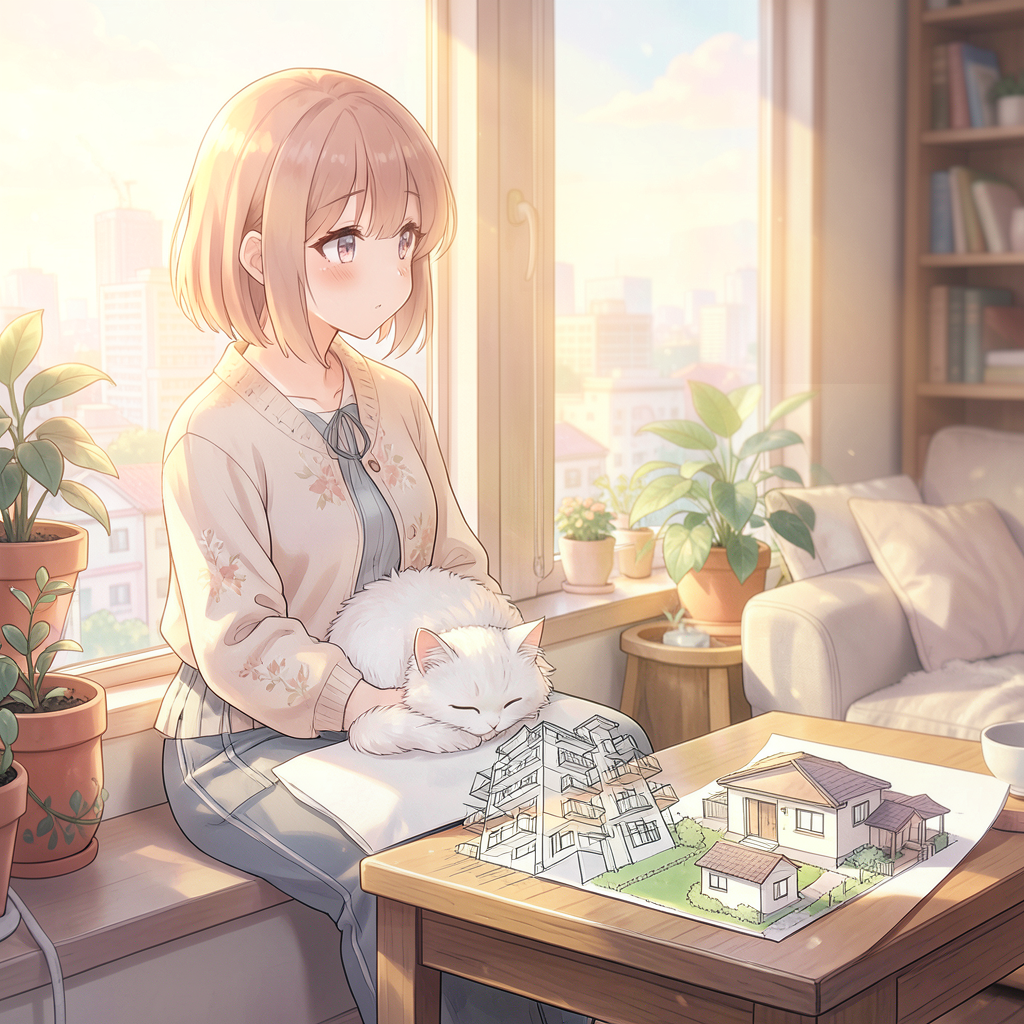
The first thing I realized is that “Haus” and “Wohnung” aren’t interchangeable. Seriously. I kept asking real estate agents for a “Haus” and getting utterly bewildered stares. Apparently, “Haus” means house – a detached building, often with a garden. “Wohnung” is an apartment. It’s a massive difference. My first agent, Herr Schmidt, kept saying, “Sie suchen eine Wohnung?” and I was just nodding, completely lost. It took a friend to explain, “Wohnung means a flat, an apartment in a building, you know? Like in London.”
Exploring the Options: Wohnung, Haus, or WG?
After that, I started researching the options. There are basically three:
- Wohnung (Apartment): This is the most common. They come in all shapes and sizes. I eventually found a lovely one-room apartment (eine Einzimmerwohnung) in Schwabing – perfect for a solo traveler.
- Haus (House): These are generally more expensive and require more upkeep. They usually come with a garden and you’ll likely have neighbours. I briefly looked at a Haus in Giesing – it was gorgeous, but the thought of mowing the lawn was instantly exhausting.
- WG (Wohngemeinschaft): This is a shared flat. It’s hugely popular, especially amongst students and young professionals. It’s like a house, but you share the space with other people.
My WG Experience – A Comedy of Errors
I decided to go for a WG because it seemed more affordable and, honestly, I was a bit overwhelmed by the whole apartment searching process. I found a place with three other people – Luke, Maria, and David – in a really cool area of Altona. My first few days were… chaotic. We had a massive argument about whose turn it was to clean the kitchen (“Wer putzt die Küche?”). And the rules! There were rules about everything – guests, noise levels (“Nicht so laut!”), even what time you could have visitors.
It was incredibly eye-opening. I quickly learned that things aren’t always straightforward and that direct communication is key. I made a huge mistake once by not saying “Bitte” (please) when asking for something. Luke just stared at me and said, “Warum nicht ‘Bitte’?” (Why not ‘please’?). It felt so awkward!
Talking About Rent and Utilities (Miete und Nebenkosten)
This was another area where I completely blanked. The first time I heard “Miete” I just nodded. It’s the rent for the apartment. Then came the “Nebenkosten” – utilities like heating, water, and garbage collection. I was told the total would be around €500 per month. Later, I discovered that “Nebenkosten” is always extra. I learned that quickly, the hard way, when I got a surprise bill for a new water pipe! It’s best to ask very specific questions. I asked, “Was ist in den Nebenkosten enthalten?” (What’s included in the utilities?). They explained everything, and it made so much more sense.
Useful Phrases for Housing Discussions
Here are some phrases I found really helpful:
- “Ich suche eine Wohnung/ein Haus/eine WG.” (I am looking for an apartment/a house/a shared flat.)
- “Wie hoch ist die Miete?” (How much is the rent?)
- “Was sind die Nebenkosten?” (What are the utilities costs?)
- “Kann ich einen Besichtigungstermin vereinbaren?” (Can I arrange a viewing appointment?)
- “Ist die Wohnung möbliert?” (Is the apartment furnished?) – This is important! I almost rented an unfurnished apartment and had to buy everything.
A Word of Warning (and Encouragement!)
Seriously, the German housing market is different. It’s slower, more bureaucratic, and requires more patience. Don’t be afraid to ask questions – even if you feel a little silly. People are generally helpful, even if their first language isn’t English. I made a lot of mistakes, but I learned from them. And you will too. Don’t get discouraged! Finding a place to live in Germany is a challenge, but it’s also a really important part of building a new life here. Now, if you’ll excuse me, I need to go explain to Luke that I cleaned the kitchen…
—

Leave a Reply