
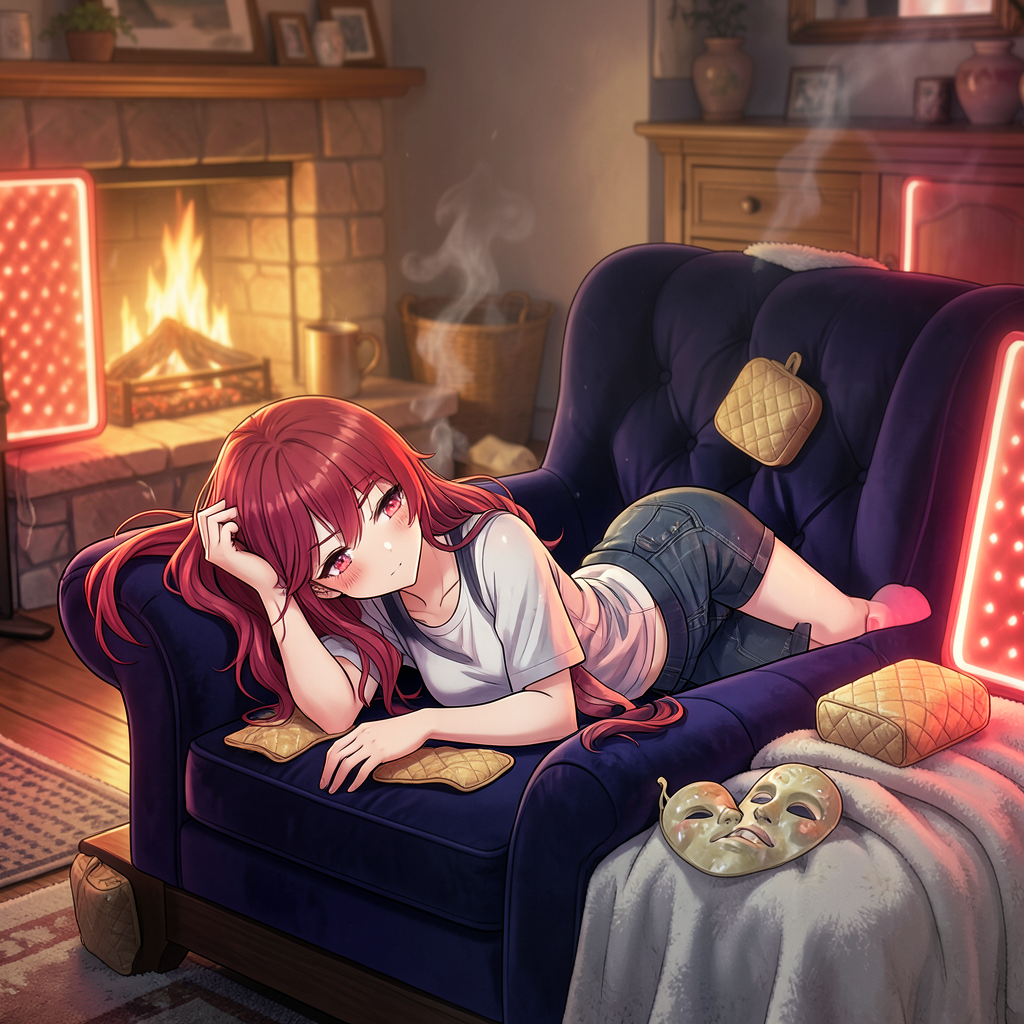
Decoding Heat: My Journey with German Fango, Red Light, and Hot Packs
Okay, so here I am, six months in Berlin, and let’s be honest, the winters are brutal. I’d always heard about the German love of ‘heilmittel’ – remedies – but I didn’t really grasp the extent until I started dealing with a particularly nasty lower back pain. My doctor, Dr. Schmidt, suggested a treatment plan that involved something called ‘Fango,’ ‘Rotlicht’ (red light), and ‘Warmlpacks.’ Honestly, at first I was completely lost. It felt a bit… holistic, and a little intimidating. This article is about what I’ve learned, the awkward conversations, and the surprising benefits.
My First Encounter with Fango
The first time I experienced ‘Fango’ was incredibly strange. It’s basically heated clay, and Frau Müller, the physiotherapist, applied it to my lower back with a surprisingly firm hand. “So, wie fühlt es?” she asked, looking concerned. I just mumbled, “Äh… warm? Und… irgendwie komisch.” (So, how does it feel? And… somehow weird.)
She explained, patiently, that the heat draws out lactic acid and toxins, which was all pretty theoretical to me. The important thing was the feeling – intense warmth! It was definitely… intense. After about twenty minutes, she removed it, and my skin felt instantly smooth, but also a bit prickly. “Gut, richtig?” she said, and I nodded gratefully. I learned quickly that asking “Wie fühlt es?” is essential – don’t just silently endure. It’s your chance to actually tell her if it’s burning, soothing, or just plain strange.
Red Light Therapy: A Little Bit Sci-Fi
‘Rotlicht’ was even more bizarre. It’s basically a special lamp that emits red light. Dr. Schmidt said it helps with muscle recovery and inflammation. I was skeptical. It felt like sitting under a warm, slightly buzzing light. “Das Licht ist nicht unangenehm, oder?” he asked, monitoring my skin. “Ein bisschen wie eine warme Decke,” he added, which roughly translates to “It’s not uncomfortable, right? Like a warm blanket.”
I was honest: “Ja, es ist warm. Aber ist es… wirklich hilfreich?” (Yes, it’s warm. But is it… really helpful?) He explained it was promoting cellular repair. I still didn’t believe it, but honestly, my back did feel better afterwards. The important phrase here is ‘Es ist nicht unangenehm’ – that’s your go-to response when you’re unsure if something is hurting you.
Hot Packs – The Most Common Sense
The ‘Warmlpacks’ were the simplest. Just standard hot packs, but Frau Müller showed me the best way to use them – wrapping them in a towel to avoid burning my skin. She gave me a few for home use, and I started incorporating them into my routine. I learned quickly that I needed to be careful, especially in the beginning. “Nicht zu lange!” she cautioned me when I was using one for about an hour. “Nicht zu lange!” – Don’t overdo it.
I’ve found that having a few ‘Warmlpacks’ handy is a lifesaver during those particularly harsh Berlin nights. I’ve even started buying them myself from pharmacies – they’re called ‘Wärmepackungen’, and you can find them everywhere.
Communication Challenges & Key Phrases
Honestly, the biggest challenge wasn’t the treatments themselves, but communicating my needs. I quickly learned that using simple phrases is crucial. Here are some that have saved me:
- “Es ist zu heiß!” (It’s too hot!) – If the heat is becoming unbearable.
- “Es ist nicht angenehm.” (It’s not comfortable.) – A good general phrase to express discomfort.
- “Wie lange soll ich das verwenden?” (How long should I use this for?) – Essential for controlling the duration.
- “Kann ich das stillen?” (Can I stop it?) – Always good to have an exit strategy.
A Word of Caution (and a Little Humour)
I’ve made a few mistakes, of course. Once, I left a hot pack on for too long, and my skin was red and stinging. Frau Müller just laughed and said, “Ach, das passiert!” (Oh, that happens!). She pointed out that learning to listen to your body is key – and maybe not lingering too long under the ‘Rotlicht’!
Learning about these traditional German remedies has been a fascinating part of my experience here. It’s not just about physical treatment; it’s about the connection between mind and body, and the acceptance of different approaches to well-being. And who knows, maybe a little Fango and Red Light are exactly what I needed to adjust to this wonderfully chilly, wonderfully complicated, German life.
—
Would you like me to elaborate on any specific aspect of this article, such as a particular dialogue, or perhaps provide some more common German phrases related to health and wellness?

Leave a Reply