
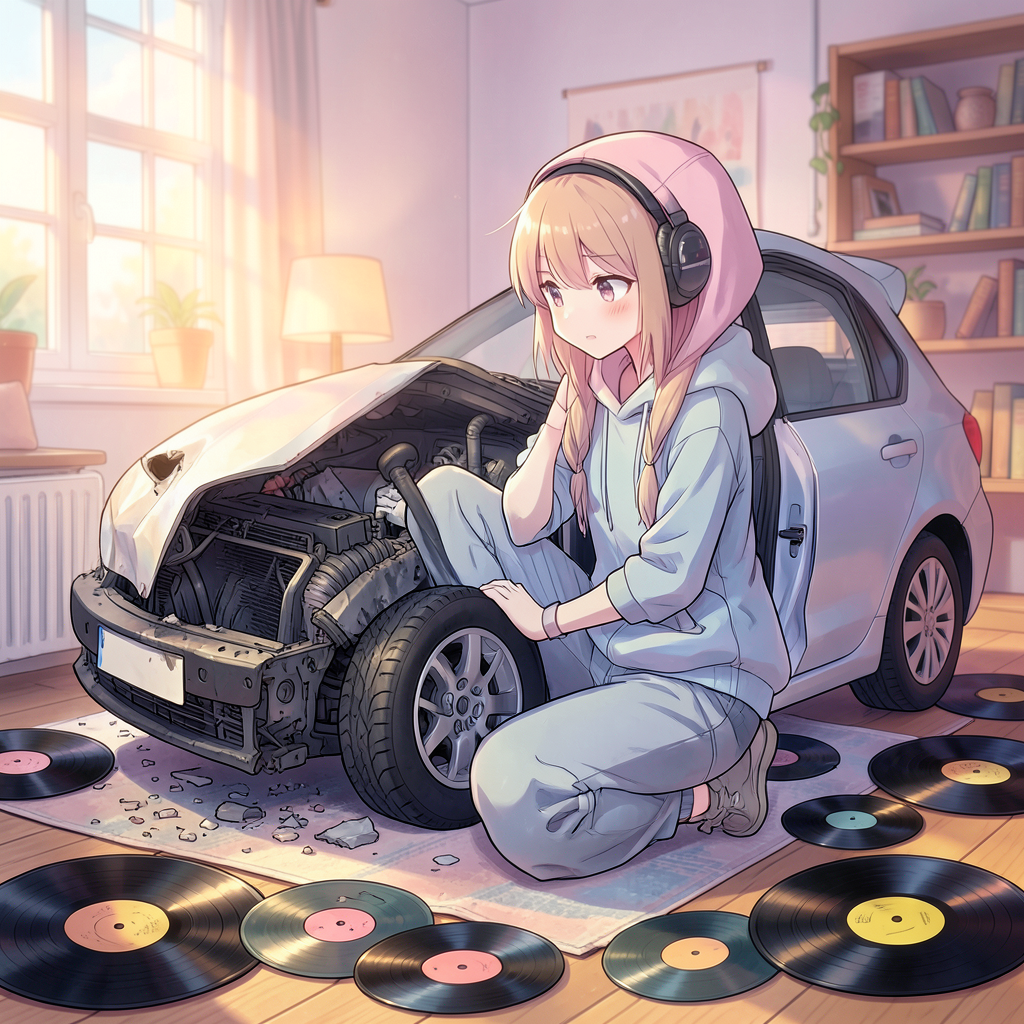
My First Accident: Learning German Through ‘Blechschaden’
Okay, so this is…weird to write about, but it’s actually been really helpful for my German. I’ve been living in Munich for six months now, working as a translator, and things have been mostly amazing. The beer is fantastic, the people are generally friendly, and I’m slowly getting the hang of navigating the U-Bahn. But last week? Last week was a complete disaster. And it taught me a lot about how Germans deal with, well, everything – especially when your car gets messed up.
The Scene: A Messy Situation
It happened on the way home from a client meeting. I was driving through Schwabing – beautiful area, terrible traffic – and suddenly, this scooter just…swerved into my lane. I slammed on the brakes, and bam. My front bumper is completely crumpled. It was awful. I was so shaken up.
The first thing I did, completely instinctively, was yell, “Verdammt!” – seriously, that’s the first word that came out. A German friend, Klaus, who lives nearby, happened to be walking his dog, and he rushed over. He looked incredibly concerned.
The German Dialogue – Initial Reactions
The initial conversation was a bit of a comedy of errors on my part. I started rambling in English, trying to explain the situation, but Klaus kept interrupting with “Nein, nein! Erst die Polizei!” (No, no! First the police!).
Here’s how it went:
Me: “I’m so sorry, I didn’t see him! It was completely his fault, you know? He just… swerved.”
Klaus: “Schockierend! Erst die Polizei! Wo ist die Polizei?” (Shocking! First the police! Where is the police?)
Me: “The police? But… it’s just a little damage… Blechschaden?” (I’d heard this term before, thankfully!)
Klaus: “Blechschaden? Ja, ja, aber trotzdem die Polizei! Es ist wichtig! Wir müssen den Schaden melden!” ( Blechschaden? Yes, yes, but still the police! It’s important! We need to report the damage!)
I quickly learned that “Blechschaden” (literally “sheet metal damage”) is the phrase for a minor car accident in Germany. It’s a very common and perfectly acceptable way to describe the situation, even if the car is clearly wrecked. I felt a bit embarrassed, but Klaus was reassuring.
Key Vocabulary – Beyond ‘Blechschaden’
It wasn’t just Blechschaden though. I picked up a whole bunch of useful words and phrases.
- Schaden melden: To report the damage. This was crucial.
- Die Polizei: The police. I learned to say “Die Polizei, bitte!” (The police, please!) quickly and confidently.
- Das Unfallprotokoll: The accident report. I needed to fill this out at the police station.
- Der Schaden: The damage.
- Die Pühle: (pronounced Puh-leh) – This is another word for bumper. I kept saying it wrong, and Klaus patiently corrected me.
- Nicht meine Schuld! (Not my fault!) – I used this a lot (perhaps too much!).
The Police Station – A Different Kind of Meeting
The police station was… intense. The officer, a very serious man named Herr Schmidt, asked me a lot of questions. He kept referring to the “Unfallprotokoll,” which I hadn’t even started filling out yet. He asked me about insurance, witnesses (there weren’t any), and the exact location of the accident.
The most helpful thing I learned was that even if it’s Blechschaden, you still have to report it. It’s about liability and insurance claims. I fumbled through my German, trying to explain I had comprehensive insurance, and he just nodded, writing everything down meticulously.
Lessons Learned (And a Little Relief)
It was a stressful experience, but honestly, it was invaluable for my German. I realised that Germans, even in stressful situations like a car accident, are incredibly direct and efficient. They aren’t prone to lengthy apologies or explanations – they just get to the point. And that’s exactly how I need to improve my communication.
The best part? Klaus’s insurance covered the repairs. I still cringe when I think about it, but I’m glad it was a relatively minor Blechschaden. And I now know exactly what to say – “Verdammt!” and “Wo ist die Polizei?” – and I’m a lot more confident about handling a tricky situation.
Would you like me to talk about how to ask for a repair estimate in German ( Kostenvoranschlag)?

Leave a Reply