
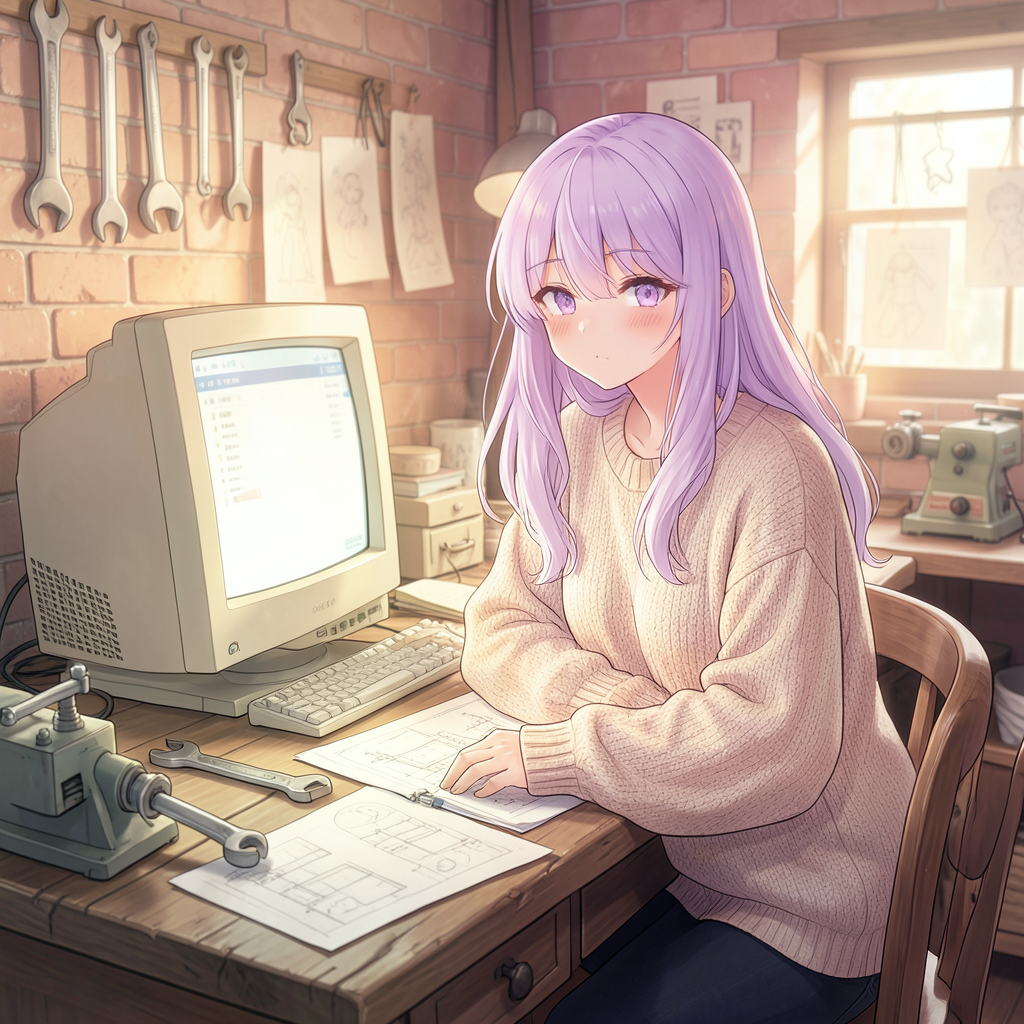
Navigating the Werkstatt: My German for Work – Tools & Machines
Okay, so here I am. Three months in Germany, working as a junior technician in a small metal workshop, and let me tell you, learning the German for this job has been… a rollercoaster. It’s not the textbook German I was trying to drill into my head before I arrived. It’s gritty, practical, and sometimes makes me want to throw my wrench across the room (which, thankfully, I haven’t done yet!).
The First Day: “Wo ist der Schraubenschlüssel?”
The first day was chaos. I was introduced to Herr Schmidt, the foreman, and he immediately pointed to a pile of tools and said, “Hier! Benötigst du etwas?” (Here! Do you need something?). I wanted to say, “I need a screwdriver,” but I completely froze. I managed a mumbled, “Ich brauche… einen Schraubenzieher?” He looked at me patiently and said, “Ja, das ist ein Schraubenzieher. Wir haben verschiedene Größen. Welchen brauchst du?” (Yes, that is a screwdriver. We have different sizes. Which one do you need?). It was then I realized ‘einen’ is crucial – you need the definite article! I ended up grabbing a small Phillips head. It felt like a huge victory.
Essential Vocabulary – Tools & Machines
Let’s talk about the words I’m actually using. It’s not just “Schraubenzieher” (screwdriver). Here’s what’s become my daily bread:
- Schraube: Screw
- Schraubenschlüssel: Wrench
- Hammer: Hammer ( Hammer – same as English!)
- Zange: Pliers
- Bohrmaschine: Drill ( Bohrmaschine – pronounced roughly “bohr-ma-shine”)
- Multifunktionswerkzeug: Multi-tool (This one’s handy!)
- Werkzeugkasten: Tool box ( Werkzeugkasten – really important!)
- Maschine: Machine (general term)
- Stanzpresse: Punch press (specifically what I work with – they’re a bit scary!)
Talking About the Machines – Simple Sentences
I’ve found some basic phrases are lifesavers. “Die Maschine ist kaputt” (The machine is broken) is one I use a lot. Yesterday, the stamping press wouldn’t start, and I had to calmly tell Herr Schmidt, “Die Stanzpresse funktioniert nicht. Ich werde sie überprüfen.” (The punch press isn’t working. I will check it.) He just nodded and pointed to the electrical panel. Thankfully, it was just a loose wire.
Another common one is “Wie funktioniert das?” (How does it work?). I asked this a lot when I was first learning about the punch presses – it’s not intuitive! It usually leads to a lengthy explanation (often in German, which is great for learning, but can be overwhelming!).
Common Mistakes (and How to Avoid Them)
I’ve made a few… memorable errors. The biggest one was when I was trying to adjust a hydraulic cylinder. I said, “Ich mache es größer!” (I’m making it bigger!), and Herr Schmidt quickly corrected me. “Nein, nein! Du musst die Ventile einstellen!” (No, no! You must adjust the valves!). It’s amazing how differently things can be expressed. Also, Germans love precision. Saying “das ist okay” (that is okay) when something isn’t quite right is a massive faux pas! “Es ist nicht optimal” (It is not optimal) is the much better choice.
Asking for Help – “Können Sie mir helfen?”
Don’t be afraid to ask for help. Seriously. It’s better than making a bigger mistake. The most useful phrase is “Können Sie mir helfen?” (Can you help me?). I’ve used it countless times – with Herr Schmidt, with the older technicians, even with the receptionist, Frau Müller. She always patiently explains things, even if she uses a lot of technical jargon. “Das ist ein Verfahren,” she’ll say, and I just nod and try to understand.
My Current Goal: “Ich lerne weiter” (I am learning more)
Right now, I’m focusing on learning the specific terminology for the punch presses and the hydraulic systems. I’m making flashcards, and I’m trying to listen carefully to how the older technicians talk about the machines. “Das ist eine blockierende Funktion” (This is a blocking function)… it’s slowly starting to make sense.
Honestly, the biggest challenge isn’t the grammar; it’s understanding the context and knowing the right words to use. But with a little practice, a lot of patience, and a willingness to make mistakes (and learn from them!), I’m getting there. Ich lerne weiter! (I am learning more!).
—
Would you like me to elaborate on any particular area, such as a specific piece of equipment, a particular phrase, or a scenario you’d like me to detail further?

Leave a Reply