
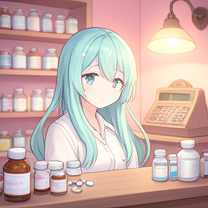
Navigating German Emergencies and Pharmacies: My Chaotic Learning Journey
Okay, so here I am, six months in Berlin, and let me tell you, learning German isn’t just about ordering a coffee. It’s about survival, and sometimes, frankly, panic. I’d spent ages studying the grammar – past perfect, subjunctive, all the fancy stuff – but it wasn’t until I actually needed it that I realised how little I truly understood. This whole experience has been a crash course in practical German, and I’m going to share what I’ve learned, specifically focusing on emergencies and pharmacies. It’s been terrifying and exhilarating in equal measure.
The First Call: A Broken Arm and a Massive Misunderstanding
My first real test came last month. I was cycling home when – whump – I went down. A broken arm, a bruised ego, and a very confused German ambulance crew. My initial reaction, naturally, was to shout, “Ich habe mich verletzt!” (I have been injured!) but it wasn’t enough. The paramedics needed more information.
They started asking questions in rapid-fire German. “Wo tut es weh?” (Where does it hurt?) “Wie ist es passiert?” (How did it happen?). I managed to stammer out, “Ich bin gefallen von meinem Fahrrad,” (I fell from my bicycle). But because I hadn’t used the passive voice correctly, they assumed I had been deliberately thrown from my bike! The confusion escalated. Eventually, a kind colleague who spoke decent English stepped in and translated, explaining my accident clearly. It was mortifying, but it hammered home the need for precision.
Key Phrases:
- Ich bin gefallen (I fell) – Need to be careful with the verb forms!
- Ich wurde von meinem Fahrrad heruntergestoßen (I was pushed/knocked off my bike) – Using the passive voice is crucial here.
Pharmacy Panic: Asking for Medication
Pharmacies (Apotheken) are another beast altogether. They’re incredibly efficient, which is great, but also incredibly intimidating when you can’t understand a word. My initial attempts to explain my headache were a disaster.
“Ich brauche Medikamente für Kopfschmerzen,” (I need medication for headaches) just didn’t cut it. The pharmacist, a wonderfully patient woman named Frau Schmidt, kept saying, “Was möchten Sie probieren?” (What would you like to try?) with a polite but clearly bewildered expression.
I eventually managed to formulate a sentence using the passive voice, remembering a phrase my colleague had taught me: “Kann ich bitte eine Tablette gegen Kopfschmerzen bekommen?” (Can I please get a tablet for a headache?). This was much better. The pharmacist then explained the instructions – die Wirkung (the effect) and die Dosierung (the dosage) – in detail, and thankfully, I understood.
Important Vocabulary & Passive Structures:
- Die Wirkung (The effect) – “Die Wirkung des Medikaments ist…” (The effect of the medication is…)
- Die Dosierung (The dosage) – “Wie hoch ist die Dosierung?” (What is the dosage?)
- Ich möchte eine Beratung (I would like a consultation) – This is a useful phrase to politely ask for help understanding medication.
Modal Verbs for Requests and Permissions
Modal verbs have been lifesavers. I’ve found “können” (can) and “dürfen” (may/must) incredibly useful when requesting things or seeking advice.
For example, I needed to ask if I could buy a specific cream at the pharmacy. I said: “Darf ich bitte diese Creme kaufen?” (May I please buy this cream?). This felt much more polite than just shouting, “Ich will diese Creme!” (I want this cream!).
Similarly, when asking a doctor for a prescription, I used “Können Sie mir ein Rezept ausstellen?” (Can you give me a prescription?). It’s about showing respect and acknowledging their authority.
Common Mistakes and How I Learned From Them
Honestly, I’ve made so many mistakes. I once asked for “ein Aspirin” (an aspirin) and received a tiny, brown tablet that was clearly not aspirin at all – it was something completely different! I learned quickly to say “Ich brauche Aspirin” (I need aspirin) and to always double-check what I was being given.
Another time, I tried to say I had a fever. I used the wrong word for “temperature” (die Temperatur) and completely confused the pharmacist. They had to repeat the question several times before I finally understood I needed to say “Ich habe Fieber” (I have a fever).
- Lesson Learned: Don’t assume everyone understands your English! Speak slowly and clearly, and be prepared to repeat yourself. Also, learning the correct vocabulary is paramount.
My Ongoing Journey
Learning German in this context – emergencies, pharmacies, everyday interactions – is forcing me to move beyond just reciting grammar rules. It’s about building a vocabulary, understanding cultural nuances, and, crucially, learning to communicate effectively, even when I’m stressed, in pain, or completely bewildered. It’s a long process, definitely, but every awkward conversation, every successful request, every moment of understanding, brings me one step closer to feeling truly settled in this amazing, sometimes overwhelming, country. I still have a long way to go, but I’m starting to feel a little less panicked, and a lot more confident. And that, I think, is a huge victory.

Leave a Reply