
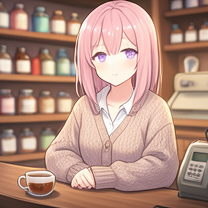
Navigating the Apotheke: My First Forays into German Pharmacy
Okay, so I’ve been in Berlin for six months now, and let’s be honest, the first few weeks were a blur of confused gestures and frantic Google Translate searches. I’d managed to order coffee and groceries, but venturing into the Apotheke – the pharmacy – was a completely different beast. It’s a vital part of German life, obviously, but the whole process felt incredibly intimidating at first. I really wanted to learn how to talk about my health, my medications, and just generally get what I needed. This isn’t a grammar lesson; it’s about what I actually did and learned.
The Initial Panic – “Ich brauche…was?”
The first time I went, I walked in feeling utterly lost. The shelves were packed with boxes and bottles, and everyone seemed to be speaking so fast! I needed some ibuprofen for a headache, which, of course, I just knew the name of. I mumbled something to the pharmacist, a nice older man named Herr Schmidt, and said, “Ich brauche…was?” (I need…what?). He looked slightly puzzled. He then proceeded to launch into a rapid explanation about different brands of Ibuprofen, all with different ingredients! I just stared blankly, nodding occasionally, completely overwhelmed.
I realized immediately that just knowing what I wanted wasn’t enough. I needed to know how to ask for it.
Essential Phrases & Vocabulary
Here’s what I started to learn, and what really helped me:
- “Ich brauche…” (I need…) – This is the absolute starting point.
- “Ein Rezept…” (A prescription) – Crucial! I learned that for stronger medications, you need a prescription from your Arzt (doctor).
- “Bitte…” (Please) – Always polite!
- “Was kostet das?” (How much does that cost?) – A must-know!
- “Ist das für mich geeignet?” (Is this suitable for me?) – Important for asking about side effects or if it’s okay for my specific condition.
- “Wie nehme ich das ein?” (How do I take this?) – I asked this a lot!
My First Actual Conversation
Okay, so, the next time I went, I was slightly more prepared. I went to the same Apotheke. I walked up to the counter and said, “Guten Tag, Herr Schmidt. Ich brauche Ibuprofen gegen Kopfschmerzen. Ein [Dosage – e.g., 200mg] Tablette, bitte.” (Good day, Mr. Schmidt. I need Ibuprofen for a headache. One [dosage] tablet, please.)
He looked relieved! He then asked, “Haben Sie Allergien?” (Do you have any allergies?) I had to admit, “Ja, ich bin allergisch gegen Aspirin.” (Yes, I am allergic to aspirin). He immediately offered me a different brand, which was fantastic.
He also gave me a small leaflet in German explaining how to take the ibuprofen, which was brilliant. I repeated back, “Ich nehme eine Tablette alle sechs Stunden, richtig?” (I take one tablet every six hours, right?) He confirmed, “Richtig!” (Right!)
Common Mistakes & How I Fixed Them
I made so many mistakes! The biggest one was assuming everyone would automatically understand what “Kopfschmerzen” meant. I learned quickly that saying “Ich habe Kopfschmerzen” (I have a headache) can sound a bit dramatic. I now just say “Ich brauche Ibuprofen für Kopfschmerzen” – it’s much clearer.
Another time, I tried to bargain for a discount, which I quickly realized isn’t really done in German pharmacies. It seemed a little rude, and Herr Schmidt just smiled and said, “Der Preis ist der Preis.” (The price is the price.)
Getting More Specific – “Ich habe eine Erkältung” (I have a cold)
Recently, I started feeling really under the weather – a proper Erkältung (cold). I went back to the Apotheke and, feeling a bit embarrassed, I said, “Ich habe eine Erkältung. Ich habe Husten und Halsschmerzen.” (I have a cold. I have a cough and sore throat.)
This time, the pharmacist recommended a cough syrup with honey. He even helped me read the instructions on the bottle, which were mostly in German. I felt a lot more confident knowing I could explain my symptoms and ask for advice.
Final Thoughts – It’s Okay to Ask!
Honestly, the Apotheke was one of the most stressful places I visited when I first arrived in Germany. But, I learned that it’s okay to make mistakes. Most people are incredibly helpful and patient. The key is to start building a small vocabulary, learn a few essential phrases, and don’t be afraid to ask for help. Even saying “Ich verstehe nicht” (I don’t understand) is perfectly acceptable! Now, if you’ll excuse me, I’m off to stock up on some Schmerzmittel (painkillers)!

Leave a Reply